Education 7 min read
How to Buy a Custom Barrel Sauna: Consultation to Delivery
By Nomad Sauna
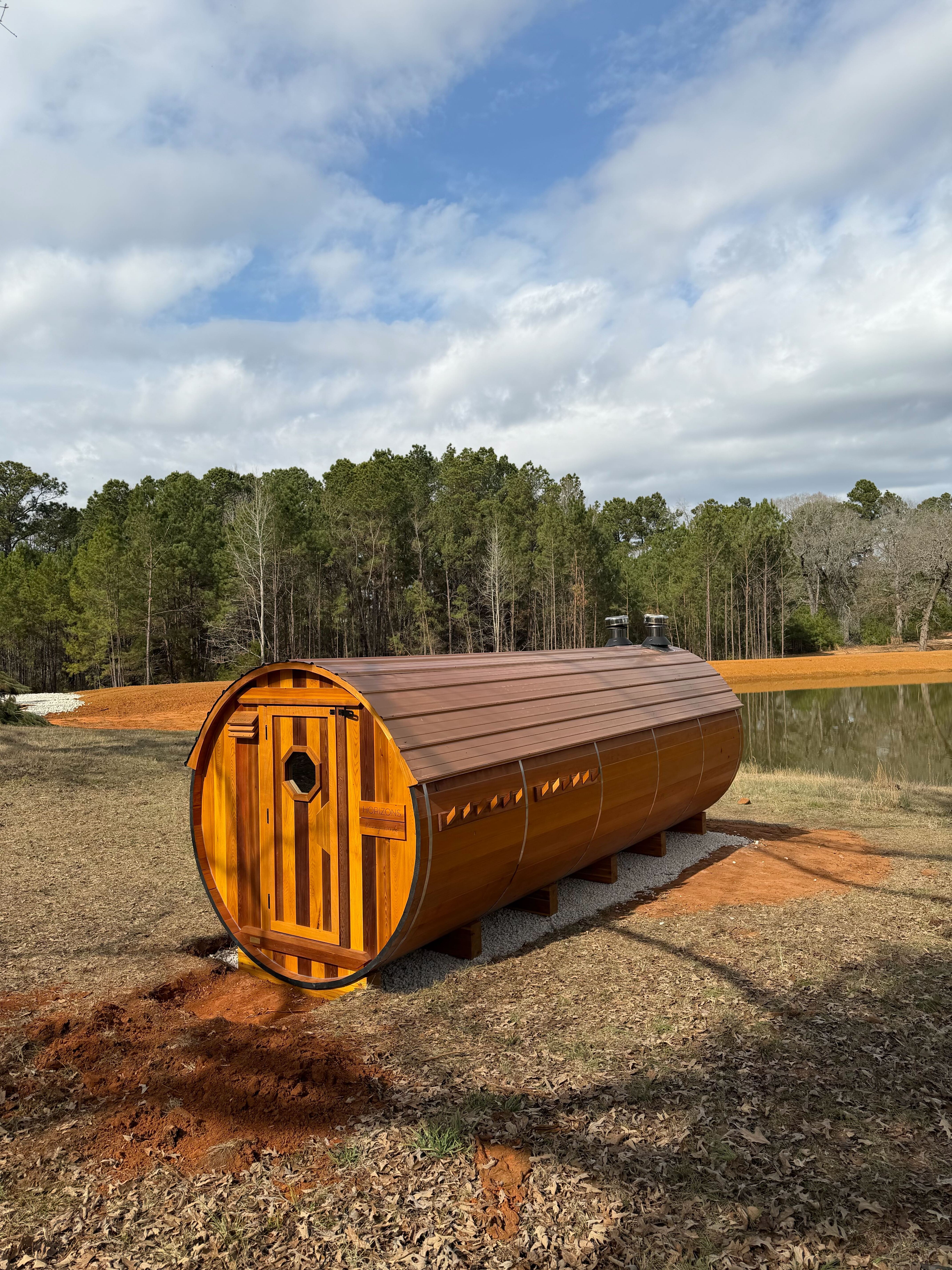
Buying a custom barrel sauna isn't a checkout button. It's a real process with a handful of decision points — spec, deposit, site prep, delivery — spread out over a few months. None of that is a bad thing; it's what "custom" and "fully assembled" actually require. Here's what the process looks like from the first phone call to the first sweat.
Step 1: Consultation and spec
It starts with a conversation, not a form. A 30-minute consultation covers size (8, 10, or 12 ft for a stationary backyard build, or additional sizes for Mobile, Floating, and Commercial builds), stove type (electric, wood-fired, or propane), glass and door configuration, and upgrades like a Yakisugi exterior or interior lighting. This is also where site basics come up — what kind of pad or foundation the space has, what electrical service is available, and whether the sauna will sit somewhere permanent or need to move.
Step 2: The proposal
After the consultation, the spec turns into a proposal. Nomad doesn't publish prices for exactly this reason — a custom build's cost depends on size, stove, and finish choices made in step 1, not a fixed catalog number. Request a proposal once the spec is set to see what a specific configuration runs.
Step 3: Deposit and the build queue
A 50% deposit secures a spot in the build queue, with lead time running several months from deposit to delivery depending on the build. A Floating build carries additional lead time on top of that for platform fabrication — the aluminum platform is built and welded to the site's exact dimensions, so timing is quoted on request rather than a fixed range. These are ranges, not fixed dates — the queue moves, and Nomad doesn't promise a specific delivery date beyond what's quoted at the time of the proposal.
Step 4: What happens during the build (the short version)
At a high level: the shop selects and mills clear-grade Western Red Cedar, then torches or stains the staves before the barrel goes together — not after. The staves are fitted to a continuous curve and secured with band-compression joinery instead of glue or screws through the wood. Interior work — floor, benches, and backrests — is built out and fitted to that specific unit, and the heater is installed and loaded with stones. The whole thing happens in the Hudson, Wisconsin shop, and it ships as a finished sauna, not a box of parts.
Step 5: Site prep
While the build is underway, the delivery site needs to be ready. Most installations sit on a gravel pad rather than a poured slab, and most electric builds need a dedicated 240V circuit run to the site ahead of delivery — 50A service for the 8-footer, up to 70A for the 12-footer. Wood-fired and propane builds skip the electrical requirement but still need a level, stable pad.
For property owners installing a sauna for personal use, this is also where the regulatory picture is simpler than most buyers expect: a barrel sauna installed on private residential property for personal use is generally classified as an accessory structure and typically doesn't require a building permit in most U.S. jurisdictions, since it arrives fully assembled and sits on a gravel pad rather than requiring a slab pour or a building inspection. Permit requirements for accessory structures vary by municipality and HOA. While barrel saunas installed for personal use on private residential property generally don't require building permits in most U.S. jurisdictions, always verify with your local building department before installation.
Step 6: Final payment and white-glove delivery
Final payment is due before the sauna leaves the shop — settled before the truck ever loads, not handed over on the doorstep. From there, delivery is a white-glove process, not a freight drop. Nomad transports the finished sauna to the site, places it on the prepared pad, and walks the owner through the heater, vents, and startup in person before leaving. The team handles placement and setup on-site — the buyer isn't left to maneuver a barrel sauna into position or figure out startup from a manual. For an electric build, a licensed electrician needs to be on-site at delivery to make the final hookup to the 240V circuit — that connection isn't something the delivery team handles. This is the same process across product lines, whether it's a single backyard sauna or a multi-unit order for a commercial property.
Step 7: First sweat
With the sauna placed and the walkthrough done, it's a matter of loading the stove with rocks, waiting for the room to come up to temperature, and settling in for the first sweat.
Why this looks different from buying a kit
A barrel sauna kit skips most of this: add to cart, pay in full, and a pallet of pre-cut staves shows up for the buyer to assemble themselves. That's a real trade-off, not a flaw — a kit gets a buyer to a finished (self-built) sauna faster and at a lower entry price, in exchange for taking on the assembly labor and the standardized specs that come with a catalog product.
The custom process above takes longer because each step is doing something a kit's checkout flow skips: a real consultation instead of a size dropdown, a build queue instead of inventory sitting in a warehouse, and a white-glove delivery as a finished sauna instead of a flat-pack the buyer puts together and places on-site themselves. Buyers weighing kit vs. custom-built should factor the process itself into the decision, not just the price at the end of it — a longer lead time in exchange for a fully assembled, professionally placed sauna is a real trade, not just a difference in wait time.
The process, stage by stage
FAQ
How long does the whole process take, start to finish?
Plan on several months from deposit to delivery, plus whatever time it takes to finish site prep. A Floating build runs longer still since the platform is fabricated to the site's specific dimensions. Request a proposal for a timeline specific to your build.
Do I need a permit to install a barrel sauna?
For personal use on private residential property, most U.S. jurisdictions treat a barrel sauna as an accessory structure that doesn't require a building permit. Requirements vary by municipality and HOA, so always confirm with your local building department before installation. This changes for commercial installs and rental operations.
What do I need to have ready before delivery?
A level, stable pad — usually gravel — and, for electric builds, a dedicated 240V circuit run to the site. Wood-fired and propane builds only need the pad.
When is final payment due?
Before the sauna leaves the Hudson, Wisconsin shop — not on delivery day. Delivery itself is white-glove: once payment is settled, Nomad transports, places, and walks the owner through startup on-site.
Do I need to be home for delivery?
Yes. White-glove delivery includes placement on the prepared pad and a walkthrough of the heater, vents, and startup process, so someone needs to be on-site to receive that. For an electric build, a licensed electrician also needs to be on-site at delivery to make the final connection to the 240V circuit.
What's included in the proposal, and what isn't?
The proposal covers the sauna itself, transport, and white-glove installation on a prepared site. Site prep — the pad and any electrical service — is the buyer's responsibility ahead of delivery. Request a proposal for a specific breakdown.
Can I change the spec after putting down a deposit?
Reach out as early as possible if something needs to change — size, stove, or finish adjustments are easier to accommodate before the build is underway than once cedar has been milled and fitted to the original spec.
Why does a custom build take longer than a kit?
A kit ships from existing inventory in standardized configurations; a custom build starts from a consultation and gets built to that specific spec, then delivered white-glove and fully assembled rather than as parts. The extra time buys a build made to order instead of picked off a shelf.
Ready to start the process? Request a proposal or schedule a 30-minute consultation to talk through sizing, stove options, and site prep for your space. See locations for delivery and demo availability in your area.
Related saunas
- Custom barrel saunas, built to order — Backyard, mobile, floating, and commercial builds. No kits.
- Barrel sauna buyer's guide — Cost, sizing, and kit vs. custom — what to ask any builder.
- Request a backyard design consultation — Tell us about your property. We'll design a sauna around it.