Culture 6 min read
The Finnish Sauna Tradition: A Guide for Americans
By Nomad Sauna
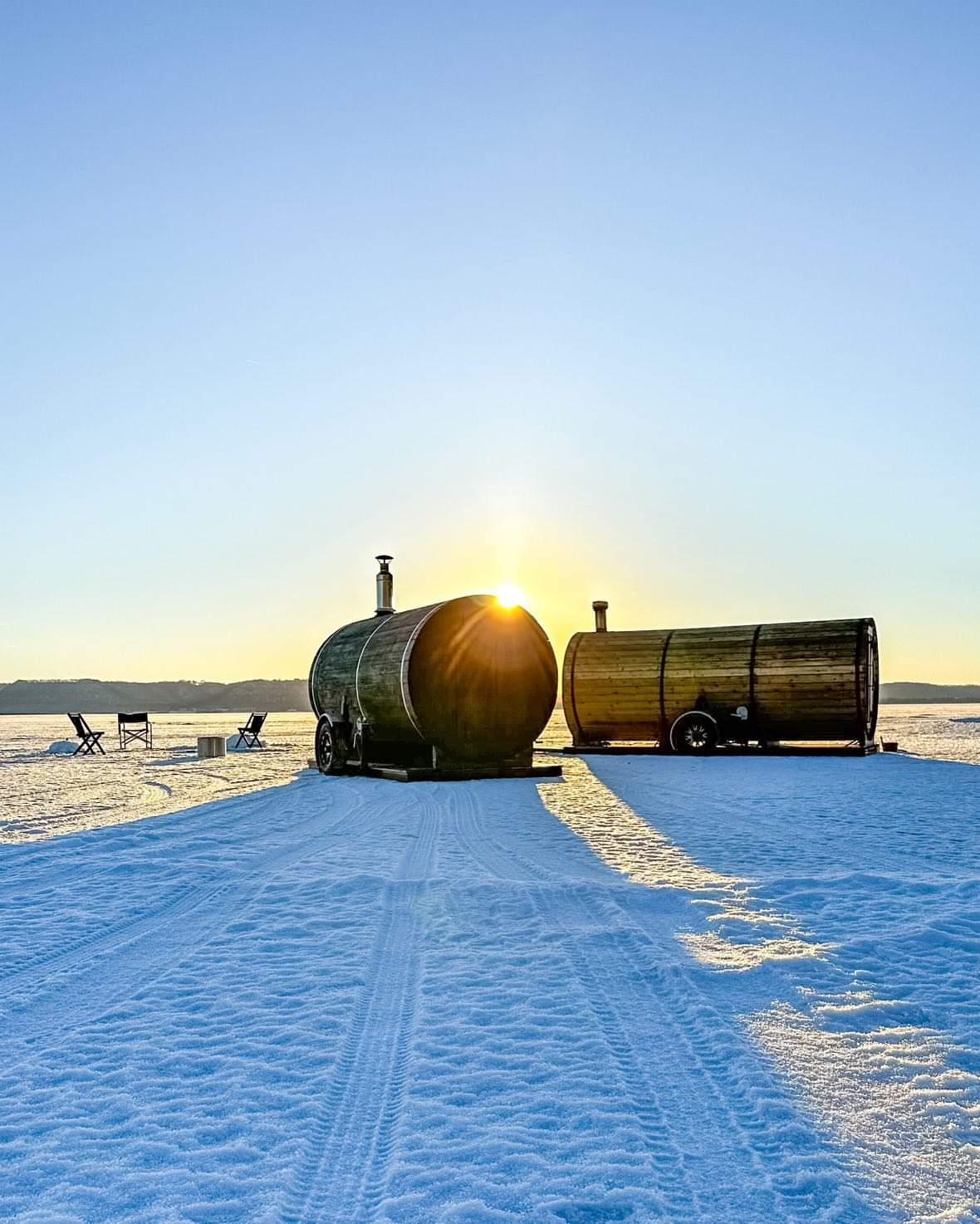
In Finland, sauna isn't really a noun. It's closer to a verb: you don't just have a sauna, you go to sauna, the way you'd say you go to sleep or go to church. That distinction matters, because most of what Americans get wrong about sauna culture comes from treating it like a hot room you visit rather than a practice with its own etiquette, rhythm, and meaning. This guide covers what the tradition actually looks like and how to bring the real version of it into a home sauna, rather than the version that's been flattened into "20 minutes in a hot box."
Sauna is older than most of Finnish history
Archaeological evidence places the roots of Finnish sauna bathing at somewhere between 7,000 and 10,000 years ago, making it roughly as old as permanent settlement in the region. The earliest form wasn't a building. It was a pit dug into a south-facing hillside, covered with hides or turf, with heated stones inside. That basic principle, trap heat with stones in an enclosed space, has never changed. Everything since has been architecture around it.
There's an old Finnish saying: first build the sauna, then build the house. For most of Finnish history this wasn't a figure of speech. The sauna was frequently the first structure raised on new land, because it served as shelter, laundry, birthing room, and healing space before the main house was finished. Finland, a country of a few million people, has at points in its history had more saunas than cars. Sauna in Finland isn't an amenity. It's closer to infrastructure.
Löyly: the word at the center of it
If there's one concept worth actually understanding, it's löyly (roughly "leu-lü"). Löyly is the steam that rises when water is thrown on hot stones, but the word means more than the physical steam. In the oldest Finnish usage, löyly also refers to something like the living spirit or presence the sauna holds. Throwing water on the stones isn't just a humidity adjustment. It's engaging with the thing that makes a sauna feel different from a hot room.
Practically, löyly depends on where the stones sit. Steam rises, so stones positioned at floor level let that steam travel through the entire height of the room, producing the even, enveloping heat Finnish sauna culture treats as the correct experience. Stones stacked high in the heater concentrate heat near the ceiling instead, which is part of why heater and stone-bed design matters more than most first-time buyers expect.
The rhythm: rounds, not one long sit
American sauna use often defaults to one continuous stretch: sit until you can't take it, then leave. Traditional Finnish practice is structured differently: rounds. Heat for 10 to 20 minutes, step out and cool down (outside air, a cold shower, historically a lake or a roll in snow), then go back in for another round. Two or three rounds is typical. The cooldown isn't a pause in the experience. It's half of it. The contrast between heat and cold is the point, not an interruption of the point.
This is also where the American "sauna and cold plunge" trend actually reconnects with something old, rather than inventing something new. Finnish sauna culture has paired heat with cold exposure for centuries; the barrel next to a cold plunge tub in a modern American backyard is a direct descendant of the sauna beside a lake in rural Finland.
Basic etiquette, if you're new to it
- Rinse before you go in. A quick rinse removes lotion, deodorant, and surface oils that can smell unpleasant against hot wood and keeps the shared space cleaner for whoever uses it next.
- Sit on a towel. Especially in shared or public settings. It's considerate and it's more comfortable on skin than bare, heated wood.
- Keep your voice down. Traditional sauna use leans quiet. It's a space for the heat and your own thoughts, not a conversation pit. This loosens up in a private family setting, but it's the default in Finnish public saunas.
- Ask before pouring water on the stones. In a shared sauna, throwing löyly affects everyone in the room. Check with others before you add steam, especially if you don't know how hot they want it.
- Don't rush someone else's round. There's no competitive angle to sauna. Staying in longer than someone else isn't a win.
What Americans commonly get wrong
Treating temperature as the whole experience. A lot of American sauna marketing focuses on hitting the highest number on the thermostat. Finnish tradition treats temperature as one input among several: steam, rhythm, cooldown, and repetition matter as much as the peak degree reading.
Skipping the cooldown. Going straight from the heat into the next task of the day, without a real cooldown period, cuts out the half of the ritual that a lot of the wellness research is actually measuring. The contrast is a feature, not an inefficiency.
Assuming nudity is the rule. Traditional Finnish sauna use is often nude, but that's a cultural norm tied to single-sex and family settings, not a universal requirement. A towel or swimsuit is entirely appropriate, and most Americans building a home sauna set whatever standard suits their own household.
Thinking sauna is a solo wellness gadget rather than a shared space. In Finland, sauna is frequently social: family sauna, sauna with friends, business conversations that happen there instead of a conference room. The American framing of sauna as a personal biohacking tool captures the heat but misses the social and communal piece that's central to the original practice.
UNESCO recognition and where the tradition stands today
In 2020, Finnish sauna culture was formally added to UNESCO's Representative List of the Intangible Cultural Heritage of Humanity, one of the relatively few living practices, rather than historical sites or objects, to receive that designation. It's a formal acknowledgment of something Finns have always understood informally: sauna isn't a product category. It's a cultural practice that happens to require a building to hold it.
The American adoption of sauna over the last decade, accelerated by the cold plunge and contrast therapy movement, wellness travel, and outdoor living trends, has brought real interest in the practice, not just the room. Buyers researching a home sauna today ask about löyly, stone coverage, and session structure in a way that wasn't common even five years ago. That's a good sign. It means the tradition is arriving intact, not just the hardware.
Bringing the tradition home
None of this requires becoming a purist or getting every detail exactly right. It does mean a few practical things are worth building into a home sauna from the start: stones positioned at floor level so löyly actually works, a heater sized to reach a real range (150–190°F) rather than a token warm room, and, if space allows, some way to do a real cooldown nearby, whether that's a cold plunge, an outdoor shower, or just stepping into cool evening air.
A barrel sauna with a continuous single-level bench places everyone in the room at the same relationship to the heat and the stones, which, per the löyly logic above, is closer to the traditional experience than a two-tier bench built to compensate for a box room's uneven heat.
FAQ
What is löyly in Finnish sauna culture?
Löyly is the steam released when water is thrown on hot sauna stones. The word also carries a broader meaning in Finnish: something like the living presence or spirit the sauna holds, not just the physical humidity.
Do you have to be naked in a Finnish sauna?
Traditionally, often yes, particularly in single-sex or family settings. It's a cultural norm, not a rule. Swimsuits, towels, or loose clothing are all acceptable, especially outside Finland.
How long do Finnish sauna sessions last?
Sessions are typically structured in rounds of 10 to 20 minutes, with a cooldown period between each, rather than one long continuous sit. Two or three rounds is a common full session.
Why is Finnish sauna culture recognized by UNESCO?
In 2020, Finnish sauna culture was added to UNESCO's Representative List of the Intangible Cultural Heritage of Humanity, recognizing it as a living cultural practice rather than a historical artifact.
What's the biggest difference between Finnish sauna tradition and typical American sauna use?
The rhythm. Finnish tradition treats the heat-cooldown cycle, repeated over rounds, as the core experience. American use often skips the cooldown and treats one long sit at maximum heat as the whole point.
Building a home sauna that gets the fundamentals right: stone placement, real heat range, room for a proper cooldown? Request a quote or explore the Buyer's Guide to start planning.
Related saunas
- Custom barrel saunas, built to order — Backyard, mobile, floating, and commercial builds. No kits.
- Barrel sauna buyer's guide — Cost, sizing, and kit vs. custom — what to ask any builder.
- Request a backyard design consultation — Tell us about your property. We'll design a sauna around it.