Education 6 min read
How Long Does a Barrel Sauna Last?
By Nomad Sauna
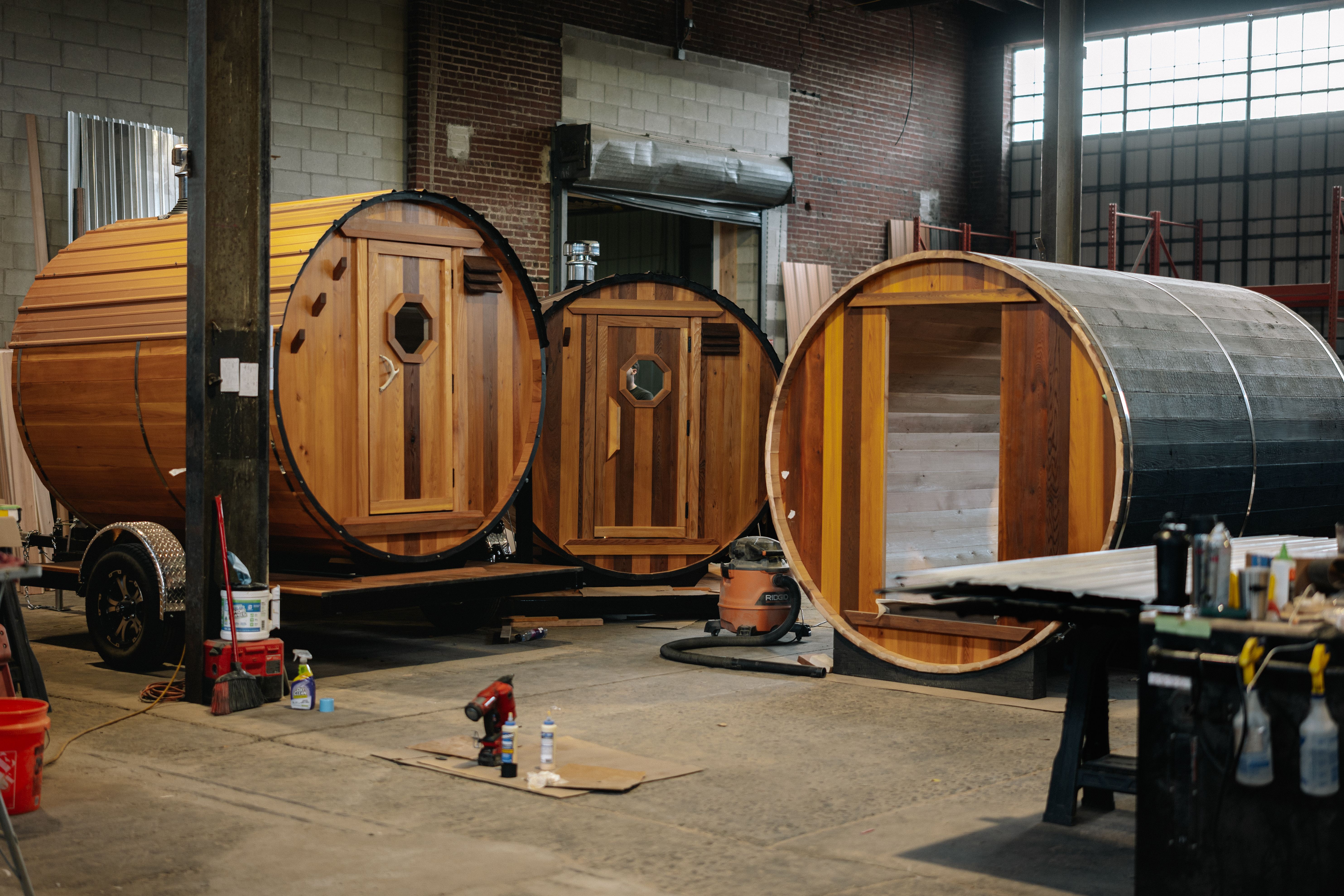
A flat-pack kit barrel sauna typically lasts seven to ten years before the joints fail. A custom-built barrel, made from clear-grade Western Red Cedar and held together without a single screw through the staves, is built for twenty-five to thirty years or more. Same basic shape, same species of wood in many cases. Very different construction, and a very different answer to how long the thing actually lasts.
The gap comes down to one question: can the wood be…wood?
Why Barrel Saunas Fail: It's Almost Always the Joinery
Wood expands and contracts with every heat cycle. A sauna stave absorbs moisture and heat during a session, then releases both as the room cools. Over a year of regular use, that's 150 to 300 full cycles. Over a decade, thousands.
A flat-pack kit typically holds its staves together with screws driven straight through the wood. As the cedar moves through each cycle, the screws don't move with it. They fight it. Over years, the wood loses that fight: it splinters and checks right at the fastener points, the same spots taking the stress cycle after cycle. That's the failure mode behind most of the shorter lifespans reported for kit saunas.
Band-compression joinery, the construction method behind every Nomad barrel sauna, works differently. Steel bands wrap around the staves and squeeze them into place. As the cedar seasons and shrinks over its first months of use, the bands tighten around it. The barrel holds itself together the same way a whiskey barrel does: no glue, no fasteners, just compression and the wood's own geometry.
The Wood Matters Almost as Much as the Joinery
Joinery gets the barrel through thermal cycling without failing structurally. The wood species and grade determine how long the material itself resists rot, insects, and decay once the joinery has done its job.
Clear-grade Western Red Cedar carries natural oils concentrated in its heartwood. Those oils are a built-in preservative: they resist decay organisms and repel insects without any chemical treatment. That's a meaningfully different starting point than a knotty or lower grade of cedar, where oil concentration is lower and knots create early failure points regardless of how the barrel is joined. For more on how the grade of cedar specifically affects longevity, see Clear Grade Cedar: What It Is and Why It Matters.
Put the two together, clear-grade cedar and band-compression joinery, and the lifespan estimate moves from the seven-to-ten-year range typical of screw-and-knotty-cedar kits to twenty-five to thirty years or more for a properly built and maintained custom barrel.
What Maintenance Actually Extends the Life of a Barrel Sauna
A well-built barrel sauna doesn't ask for much, but what it does ask for matters:
- Periodic band tightening. This is the single most important maintenance task on a properly built barrel. As the cedar seasons and moves through its early rounds of thermal cycling, the compression bands can need a check and a re-tighten to keep the barrel fully sealed and structurally tight.
- Interior left unsealed and untreated. The interior wood is meant to breathe, absorb, and release moisture every session. Sealing or staining it interferes with the exact mechanism that makes cedar work as a sauna material.
- Keep drainage clear. A sauna's floor-level drains handle both moisture drainage and air intake. Clearing debris keeps both jobs working as designed.
Notably absent from that list: an annual oil treatment on the exterior. The right exterior finish, applied correctly at build time, is built to hold up to UV and moisture on its own. If a builder's maintenance plan for their barrel sauna centers on re-oiling the outside every year, that's often a sign the finish itself isn't doing the job it should.
That's a short list on purpose. A sauna that demands constant upkeep to hit its lifespan number isn't actually built for the number it's claiming.
Does Climate Affect How Long a Barrel Sauna Lasts?
Yes, though not in the direction most people assume. The bigger stress on a barrel sauna isn't the coldest day of the year. It's the freeze-thaw cycle: repeated swings through the temperature where moisture in the wood freezes, expands, and thaws again. A sauna sitting through a stable, harsh winter actually sees less of that stress than one cycling through freeze and thaw dozens of times over a shoulder season.
Every Nomad barrel is built in Hudson, Wisconsin, where the exterior sees real winters every year. A construction method that couldn't hold up to Wisconsin freeze-thaw cycles combined with 180°F interior heat wouldn't survive its first year in the climate it's built in, let alone twenty-five.
Sun exposure matters too, mainly for the exterior finish rather than the structure itself. UV breaks down the outer surface of untreated wood over time, which is why the exterior finish itself carries more of the weight in a sauna sitting in full sun than one that's partly shaded. A properly applied finish, like Yakisugi, is built to handle that exposure without an annual re-oiling cycle; the finish protects the surface, and the joinery and wood grade determine what happens underneath it.
Kit vs. Custom-Built: The Same Distinction That Shows Up Everywhere Else
The lifespan gap between kit and custom-built barrel saunas is the same kit vs. custom-built distinction that shows up in cost comparisons, material comparisons, and build-quality comparisons across the category. It isn't a separate issue. A kit's shorter lifespan and a kit's lower price point come from the same set of decisions: thinner, lower-grade lumber and fastener-based joinery that's faster and cheaper to manufacture at scale.
That trade-off makes sense for some buyers. A kit installed for a short-timeline use case, a rental staging property, a vacation home the owner visits twice a year, doesn't need to last three decades. A backyard sauna meant to be the permanent one, the one a family uses for the next twenty years, is a different decision, and the construction method matters more the longer the intended ownership window gets.
Kit vs. Custom-Built Barrel Sauna Lifespan
Frequently Asked Questions
How long does a Western Red Cedar barrel sauna last?
A custom-built barrel sauna made from clear-grade Western Red Cedar with band-compression joinery is typically built to last twenty-five to thirty years or more, with periodic band tightening as the main maintenance requirement.
Why do kit barrel saunas fail sooner than custom-built ones?
Most kits use screws driven directly through the staves. As the wood expands and contracts with every heat cycle, the screws resist that movement instead of allowing it, and the wood eventually splinters at the fastener points. Band-compression joinery avoids this by letting the staves move freely inside the bands.
Does the type of stove affect how long a barrel sauna lasts?
Stove choice affects maintenance and operating cost more than structural lifespan. The barrel's construction, joinery method, and wood grade are the primary factors in how long the structure itself holds up.
What's the most important maintenance task for a barrel sauna?
Periodic band tightening. As the cedar seasons through its early rounds of thermal cycling, checking and re-tightening the compression bands keeps the barrel structurally tight. On a properly built barrel, it's a quick task, and it's the difference between a sauna that stays sealed for decades and one that loosens prematurely.
Is a 5-year warranty enough for something meant to last 25-plus years?
A structural warranty covers manufacturing defects in the first several years, not the full expected lifespan of the product; the same way a car's warranty doesn't match how long a well-maintained car actually runs. Nomad backs every build with a 5-year structural warranty, but the twenty-five to thirty-year lifespan estimate comes from the construction method and material, not the warranty term.
Request a quote for a custom barrel sauna built in Hudson, WI, or schedule a 30-minute consultation to talk through sizes, stove options, and what band-compression joinery means for the sauna you're about to own for a very long time.
Related saunas
- Yakisugi charred-cedar finish — The traditional Japanese finish on a Nomad barrel sauna.
- Custom barrel saunas, built to order — Backyard, mobile, floating, and commercial builds. No kits.
- Barrel sauna buyer's guide — Cost, sizing, and kit vs. custom — what to ask any builder.