Craft 6 min read
Clear Grade Cedar: What It Is and Why It Matters
By Nomad Sauna
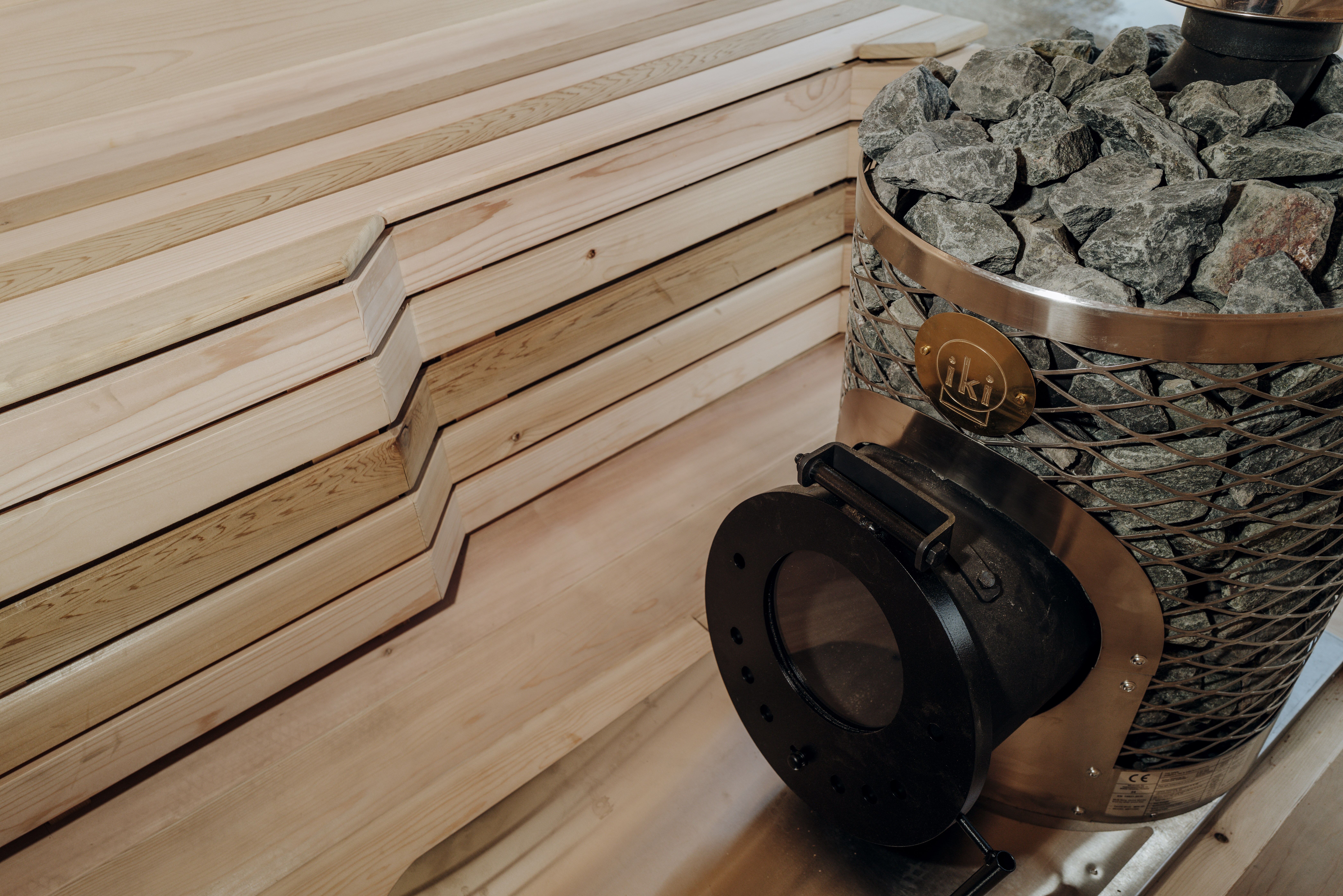
Almost every barrel sauna on the market claims Western Red Cedar somewhere in its spec sheet. Very few say what grade. The grade of cedar used influences whether you have a 10 or a 30 year product.
Clear-grade Western Red Cedar is heartwood-dominant lumber, milled to exclude knots, sourced from old growth trees with tight, consistent grain. It is the grade Nomad Sauna uses throughout every barrel it builds, and it is the reason a custom barrel sauna can be expected to outlast a flat-pack kit by decades, not years.
What "Clear Grade" Actually Means
Cedar lumber is graded on the presence of knots, sapwood, and grain defects. Clear grade sits at the top of that scale: no knots, minimal sapwood, heartwood-dominant boards cut from the densest part of mature Western Red Cedar trees.
Knots are where a branch once grew through the trunk, and they carry less of the natural oil concentration that makes cedar function as a sauna material in the first place. In a stave that heats and cools with every session, a knot is a built-in weak point.
Clear grade costs more to source because it takes a bigger, older tree and more careful milling to get. That cost shows up in the price of a sauna. It also shows up in how long that sauna holds together.
Why the Grade Matters More in a Sauna Than Almost Anywhere Else
A cedar fence board can carry a few knots and nobody notices for twenty years. A cedar sauna stave lives a harder life. It heats past 170°F, absorbs steam and moisture from löyly, then cools back down, session after session, for as long as the sauna is in use.
Every one of those cycles asks the wood to expand and contract. Clear, tight grain does that evenly across the whole board. Knots don't. Knots are denser, less flexible plugs of wood, surrounded by grain that's moving at a different rate. Over enough thermal cycles, that mismatch is where staves check, crack, or pop a knot out entirely, leaving a hole straight through the wall.
This is also where a knotty stave starts to lose the thing that makes cedar worth using in a sauna at all. Western Red Cedar's heartwood carries natural oils, compounds that give the wood its scent, its rot resistance, and its ability to shrug off insects and decay without any chemical treatment. Oil concentration is highest in dense, clear heartwood and lowest near knots and sapwood. A board full of knots isn't just weaker. It's also worse cedar, in the specific ways that matter inside a 180°F room.
Where Clear Grade Actually Shows Up in the Market
Here's the part most marketing copy leaves out: clear-grade Western Red Cedar is a premium custom-builder spec. It does not show up in flat-pack kit saunas, because it doesn't fit the kit price model. Sourcing and milling clear heartwood costs more per board foot than the commodity-grade lumber a kit is built to use.
Some kit sellers list "Western Red Cedar" in their marketing without naming a grade at all. Clear grade is a real selling point, and no builder who's actually using it leaves it off the spec sheet. If a product page says "cedar" and stops there, assume it isn't clear grade or western red.
This is the kit vs. custom-built distinction in practice. A kit ships whatever commodity lumber keeps the price down. A shop-built barrel sources and grades the material for the specific job the wood has to do. The lumber grade isn't incidental to the price gap between the two. It's a real part of what the price difference buys.
For a closer look at how cedar's natural chemistry compares to newer alternatives like thermally modified wood, see Western Red Cedar vs. Thermally Modified Wood.
Clear Grade vs. Knotty Grade
What Clear Grade Looks Like in a Nomad Build
Every Nomad barrel uses clear-grade Western Red Cedar throughout: staves, framing, and interior bench, not just the exterior face. The band-compression joinery that holds the barrel together (no glues, no screws in the barrel assembly) is built around the assumption that the wood will keep moving for the life of the sauna. Clear, consistent grain moves predictably. That predictability is what lets the bands do their job for decades instead of years.
The same grade is what makes Yakisugi, the hand-charred cedar exterior finish, char evenly across a board. A knot chars differently than the surrounding grain, leaving an inconsistent, patchy result. Clear stock is part of what makes an authentic Yakisugi finish possible in the first place.
How to Actually Verify the Grade Before You Buy
Grade claims are easy to write and hard to verify from a product photo. Three questions separate a real clear-grade claim from a marketing one:
Ask for the grade by name, in writing, on the spec sheet. "Cedar" or "premium cedar" isn't a grade. "Clear-grade Western Red Cedar" is a specific, checkable standard.
Ask whether the grade applies to the staves only, or to the framing and interior bench as well. Some builders spec clear grade on the visible exterior and something lower everywhere the buyer won't see it.
Ask to see a board, not just a photo of a finished barrel. Clear-grade cedar has a distinct, tight, uniform grain pattern. Knots and inconsistent grain are visible immediately once you're looking at raw stock rather than a stained or finished surface.
Frequently Asked Questions
Is clear-grade cedar the same as "premium" cedar in marketing copy?
Not necessarily. "Premium" is a marketing word with no fixed meaning. "Clear grade" is a specific, verifiable lumber grade with an industry definition: heartwood-dominant, no knots. Ask a builder for the grade by name, not just the species.
Can you get clear-grade cedar in a kit sauna?
Realistically, no. Clear-grade Western Red Cedar costs significantly more to source and mill than commodity-grade lumber, and that cost doesn't fit a flat-pack kit's price point. When a kit lists "cedar" without a grade, assume it's a lower grade.
Does clear-grade cedar smell different than knotty cedar?
Yes, over time. The cedar scent comes from thujaplicin oils concentrated in the heartwood. Clear-grade material, being heartwood-dominant, carries more of that oil and holds the aroma longer through repeated heat cycles than a board with more sapwood and knots.
Does the grade affect how long the sauna lasts?
Yes. Knots are structurally weaker than the surrounding grain and are the first place a stave checks or cracks under repeated thermal cycling. A sauna built from clear-grade material has fewer weak points to begin with.
What should I ask a builder about their cedar before buying?
Ask for the species and the grade, in writing, on the spec sheet. Ask whether the grade applies to the staves only or to the framing and interior as well. "Western Red Cedar" alone covers a wide range of quality; "clear-grade Western Red Cedar" is a specific, checkable claim.
Request a quote for a custom cedar barrel sauna built in Hudson, WI, or schedule a 30-minute consultation to go through sizes, stove options, and the Yakisugi finish. Every build ships fully assembled, nationwide.
Related saunas
- Yakisugi charred-cedar finish — The traditional Japanese finish on a Nomad barrel sauna.
- Custom barrel saunas, built to order — Backyard, mobile, floating, and commercial builds. No kits.