Craft 9 min read
Western Red Cedar vs. Thermally Modified Wood
By Nomad Sauna
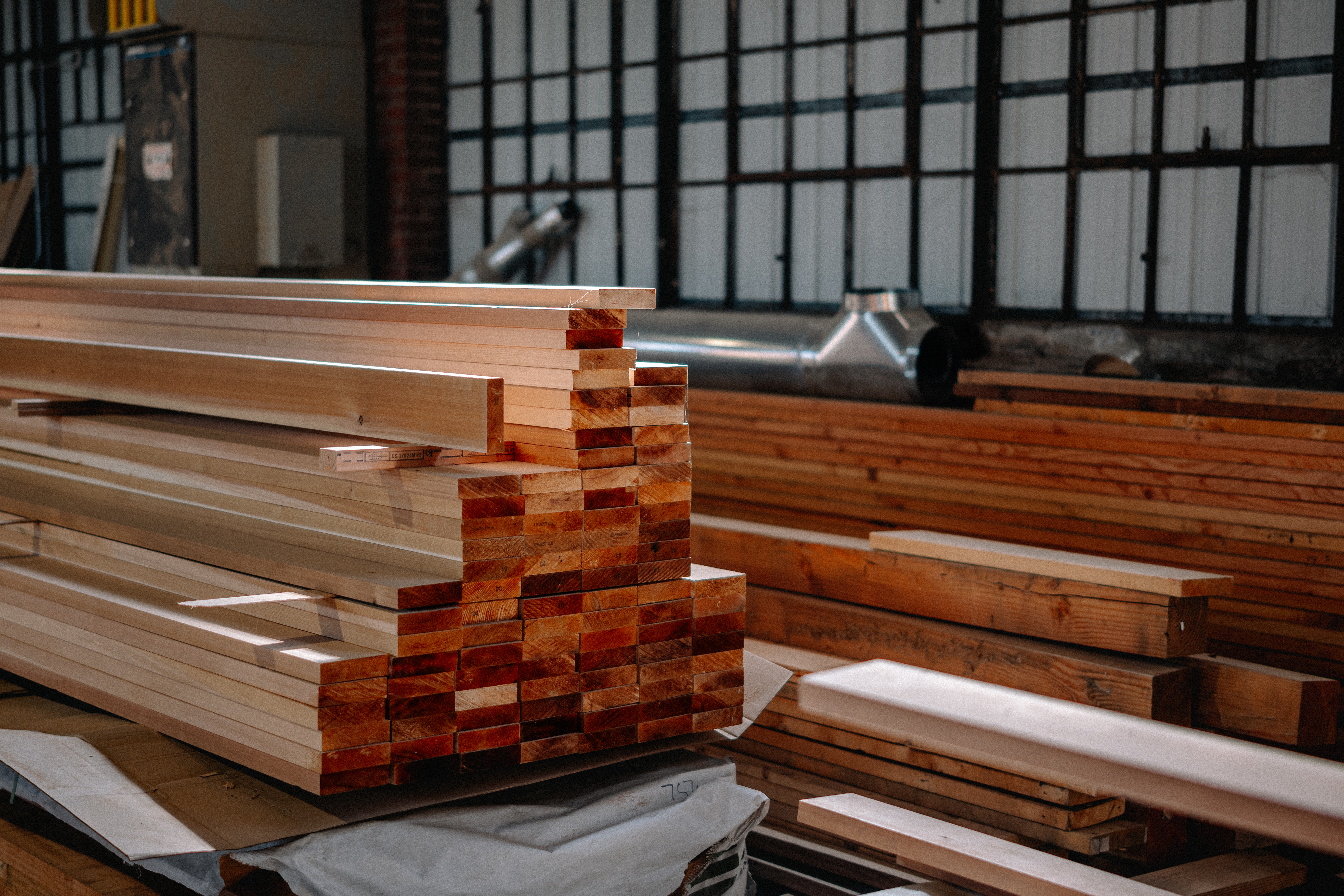
Western Red Cedar vs. Thermally Modified Wood
The staves that make up a barrel sauna's walls are in contact with 180° heat and direct steam for every session, across the life of the unit. They absorb moisture as temperatures rise and release it as the sauna cools. A well-built cedar barrel handles thousands of these cycles without cracking or losing its fit. Whether thermally modified wood holds up the same way is a question with a genuinely complicated answer, and most of the people selling it are not the ones best positioned to answer it honestly.
Here is what the difference actually means.
What Is Thermally Modified Wood?
Thermally modified wood is dimensional lumber that has been heat-treated at high temperatures (typically between 374 and 482 degrees Fahrenheit) in a low-oxygen environment. The process breaks down hemicellulose, a component of the wood's cell wall structure, which reduces the wood's equilibrium moisture content and slows its ability to absorb water.
The practical results: the treated wood is more dimensionally stable, drier, and more resistant to decay than untreated wood of the same species. Manufacturers market it as a sustainable, chemical-free alternative to tropical hardwoods and pressure-treated lumber. In exterior decking, architectural cladding, and furniture applications, thermally modified wood has a legitimate performance record.
The sauna application is where the data gets thin.
Why the Sauna Environment Is a Harder Test
An exterior deck faces sun, rain, and freeze-thaw cycles. A sauna faces all of that on its exterior, plus something the deck never sees: repeated high-heat cycles from the inside, direct steam from löyly (the Finnish practice of ladling water over hot stones) that saturates the air and the wood surface, and then a return to ambient temperatures. Every session is a full cycle. Over a year of regular use, that is 150 to 300 cycles. Over ten years, thousands.
For a stationary residential sauna in a backyard, that is demanding. For a commercial sauna running multiple sessions per day, it is aggressive. A resort sauna operating three sessions daily cycles through more thermal stress in a single month than a typical residential unit sees in a year.
The technical concern with thermally modified wood in this environment is specific. The heat treatment that improves dimensional stability does so partly by reducing the wood's ability to absorb moisture. In an outdoor decking context, that is a feature: the board stays stable and resists rot because it does not hold water. In a sauna, where wood cycles through moisture changes as part of normal operation, the same property creates a different dynamic: a stave that cannot breathe naturally may behave differently under sustained thermal stress than the manufacturer's specifications predict.
The stave geometry compounds this. Tongue-and-groove edges are the thinnest part of the profile. They move more than the face of the stave, absorb moisture from the interior air during sessions, and release it as the barrel cools. A wood with altered moisture cycling behavior will respond to that stress differently than one whose natural moisture relationship is intact. Whether differently means better, worse, or comparable over 20 years in an active sauna is precisely the question that lacks long-term independent data.
This is not a claim that thermally modified wood fails in saunas. It is an acknowledgment that long-term data for thermally modified wood under high-heat, high-steam sauna conditions does not exist in the way it exists for Western Red Cedar. Manufacturers cite general outdoor durability testing. What they cannot cite is a 15-year dataset of staves cycled through real sauna conditions in real climates.
Western Red Cedar has that track record, accumulated across decades of use by sauna builders across North America.
What Makes Western Red Cedar Work
Western Red Cedar (Thuja plicata) is not the traditional sauna wood in North America because it was the cheapest available option. It earned that position through specific performance properties rooted in its cellular composition.
WRC heartwood is rich in natural thujaplicin oils: a class of tropolone compounds concentrated in the wood's core. These oils function as built-in preservatives. They resist decay organisms, repel insects, and regulate the wood's relationship with moisture. WRC absorbs humidity during a session and releases it slowly as the sauna cools. The wood breathes with the heat cycle rather than resisting it.
This cycling behavior matters structurally. Cedar accommodates moisture changes rather than fighting them. That accommodation is what keeps a cedar stave seated in its groove, tight against its neighbors, and dimensionally predictable across thousands of sessions. A wood engineered to resist moisture absorption does not share those mechanics.
The thujaplicin chemistry is also why clear-grade Western Red Cedar smells the way it does inside a running sauna. That aromatic quality is not incidental. It is evidence that the oils are present and active in the heartwood. It is part of what makes cedar sauna the sensory standard it is.
WRC is also among the most naturally rot-resistant species on the North American continent without any chemical treatment. Heartwood-dominant clear-grade material is specified for that reason: the heartwood is where the oil concentration is highest, the grain is tightest, and the natural preservation is strongest.
The critical point: heat treatment cannot replicate natural oils. Thermally modified spruce does not acquire cedar's thujaplicin content by being kiln-treated at high temperature. It is still spruce, with better dimensional stability than untreated spruce, but without the natural chemistry that makes cedar the right material for long-term sauna construction. The treatment changes how the wood handles moisture. It does not change what the wood is.
Clear-Grade: What It Means and Why It Matters
Within Western Red Cedar, a significant quality gap exists between grades.
Clear-grade WRC is heartwood-dominant material graded to exclude knots. It comes from mature trees with tight, consistent grain and high oil concentration. It is stable, aromatic, and uniform across boards.
Lower-grade or knotty cedar contains sapwood and loose knots. Knots are structurally weaker than the surrounding grain. In a sauna environment where wood cycles through heat and moisture, loose knots become the first failure point: they check, pull out, or leave voids that trap moisture and accelerate decay at the joint.
The market reality is this: clear-grade Western Red Cedar is a premium-barrel claim. It is not found in flat-pack kit saunas. Some kit manufacturers list "cedar" or "Western Red Cedar staves" in marketing copy without disclosing the grade. When the grade is not disclosed, it is not clear-grade, because clear-grade is a selling point no honest builder leaves out of the spec sheet.
The kit vs. custom-built distinction runs through this question: a kit ships commodity lumber; a shop-built barrel sources, grades, and cuts material selected for the application. The grade is not incidental to the price difference. It is part of what the price difference buys.
The Cosmetic Yakisugi Problem
One specific issue worth understanding before making a decision at this price point: some thermally modified wood products are stamped or finished to mimic the appearance of authentic Yakisugi (焼杉), the Japanese hand-charred cedar technique also known in the U.S. as Shou Sugi Ban (a mistranslation of the original Japanese).
This is cosmetic imitation. It is not authentic Yakisugi.
Authentic Yakisugi creates a carbonized surface layer that results in a genuine UV barrier, moisture repellent, and insect deterrent. On Western Red Cedar, the charring also seals the thujaplicin oils beneath the carbon layer, extending the surface treatment's effectiveness across the life of the board.
A product stamped with a charred texture or finished to mimic that appearance delivers none of these functional properties. The look fades with UV exposure. The underlying wood gains no structural benefit. It is an aesthetic imitation dressed as a craft.
Certain Thermory products and select exterior treatments from other builders use this approach. Knowing the difference matters when evaluating any cedar barrel sauna that lists a charred exterior among its specifications.
Cedar vs. Thermally Modified Wood: A Comparison
What Nomad Builds With and Why
Every Nomad Sauna is built from clear-grade Western Red Cedar throughout: staves, framing, interior benches. Not just the exterior faces. Clear-grade WRC is specified because it is the right material for a sauna that will be used, cycled, and maintained for the better part of a lifetime. Not because of marketing. Because of what the material actually does in that environment. The band-compression joinery that holds a Nomad barrel together (no glues, no screws in the barrel assembly) is designed specifically around cedar's natural movement. Cedar expands as it absorbs moisture during a session and contracts as it releases it after. Compression band construction allows each stave to move freely through that cycle. Screwed construction resists it. Resistance, over hundreds of cycles, accumulates into structural stress. The bands allow the wood to breathe. That is the whole point.
A cedar barrel built this way is not a product with a 5-year warranty as the headline spec. It is a structure that follows the same logic Finnish sauna builders have applied for generations: the right wood, joined the right way, built to outlast the conditions that will test it.
Frequently Asked Questions
Is thermally modified wood safe to use in a sauna?
No published evidence suggests thermally modified wood is unsafe for sauna use in the sense of releasing harmful compounds. The performance concern is not toxicity. It is longevity. Thermally modified wood in outdoor decking has a reasonable track record. In the high-heat, high-steam environment of an active sauna, independent long-term data does not yet exist. Western Red Cedar has that data, across decades of use in North American sauna culture.
Does thermally modified wood smell like cedar in a sauna?
No. The aromatic properties of Western Red Cedar come from thujaplicin oils concentrated in the heartwood. The heat treatment process that creates thermally modified wood drives off the volatile aromatic compounds in the species being treated. Thermally modified spruce, hemlock, or eucalyptus will not produce the cedar scent associated with a traditional sauna session. For some buyers this is not a priority. For buyers who consider the aromatic quality part of the experience, it is worth understanding before committing.
Can you get authentic Yakisugi on a thermally modified wood sauna?
Authentic Yakisugi requires solid cedar boards charred by hand using the traditional Japanese technique. The charring creates a carbonized surface layer with genuine weatherproofing properties rooted in cedar's thujaplicin chemistry. A finish applied to thermally modified wood to mimic the charred appearance is a cosmetic treatment with no functional equivalence. The appearance will fade with UV exposure. The underlying wood does not gain the properties that authentic Yakisugi delivers.
Is clear-grade WRC available in kit saunas?
Clear-grade Western Red Cedar is not found in flat-pack kit saunas. Clear-grade WRC is sourced and milled at a cost that does not fit the kit price model. When a kit manufacturer lists "Western Red Cedar" without specifying clear-grade, the grade is lower, whether or not the copy says so. Clear-grade is a selling point that no builder buries: if it is not listed prominently, it is not the grade being used.
What should I ask a builder about wood before buying?
Ask for species and grade, in writing, on the spec sheet. "Western Red Cedar" without a grade covers a wide range of quality. "Clear-grade Western Red Cedar" is a specific, verifiable claim. Ask whether the spec applies to staves only or to the full build including framing and interior. And ask whether the staves are free to move through thermal cycles or permanently fastened. The answers to those three questions will tell you more about the sauna you are buying than any amount of marketing copy.
Request a quote for a custom cedar barrel sauna built in Hudson, WI. Schedule a 30-minute consultation to go through sizes, stove options, and the Yakisugi finish. All builds delivered fully assembled, nationwide.
Related saunas
- Yakisugi charred-cedar finish — The traditional Japanese finish on a Nomad barrel sauna.
- Custom barrel saunas, built to order — Backyard, mobile, floating, and commercial builds. No kits.