Business 11 min read
How to Build a Mobile Sauna Community: Per-Seat Sessions on the Water
By Nomad Sauna
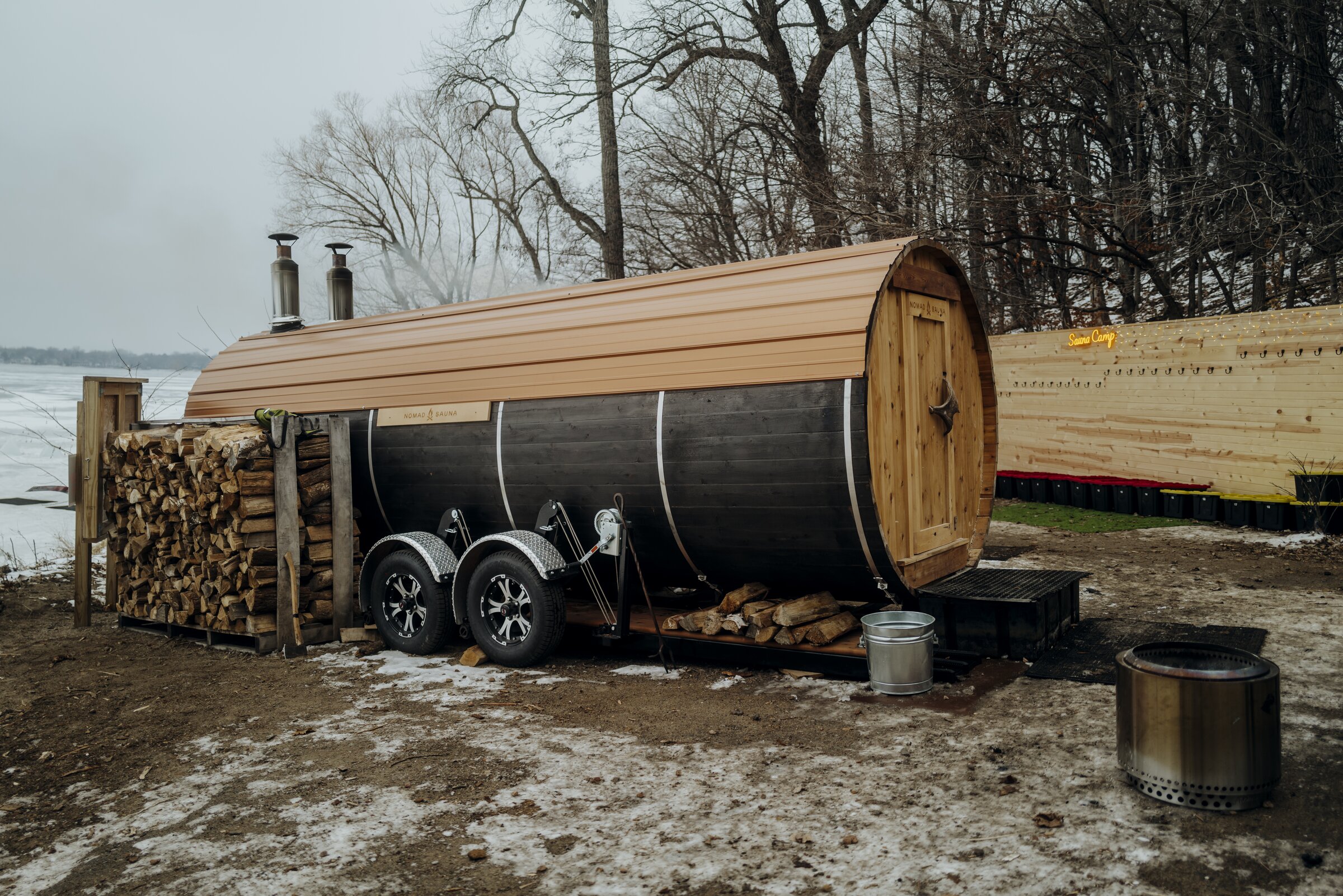
A private rental sells a sauna for a night. A community sells a place people come back to every week. That is the whole difference, and it changes almost everything about how you run the business.
A community sauna business is a mobile sauna parked at one fixed location, usually beside a lake, river, or ocean, where people book individual seats in scheduled sessions instead of renting the whole unit. Operators charge per seat, often with a monthly membership on top. It is the most involved of the three mobile sauna business models, and it is the one that builds a durable local customer base.
This guide covers why the water matters, how to choose and secure a site, how per-seat pricing and memberships work, and how to grow without burning out.
Why a Community Beats Chasing Bookings
Private rentals and event pop-ups both depend on finding the next customer. A community flips that. Once people have a regular session, a regular group, and a place to cool off afterward, the next booking mostly sells itself.
It also feeds your other revenue. Everyone who has a good session is a future private rental, birthday party, or team outing. Collect an email list from day one and the community becomes your best source of private rental leads. Nomad clients running community saunas on Lake Michigan, Puget Sound, the California coast, and the Deschutes River tell us the fixed location is where the business compounds.
It asks more of you: a place, a schedule, and a group of regulars.
Why the Water Matters
Heat is only half of a sauna session. The other half is the cold, and a natural body of water is the best cold plunge there is.
Alternating between a hot sauna and cold water is the core ritual of Finnish bathing, and a lake or shoreline gives you an unlimited, free, constantly refreshed plunge. You do not buy a tub, run a chiller, or haul water. Guests walk out of the sauna, into the water, and back in. For the cold side of the practice, our guide to sauna and cold plunge covers the details.
The water also does marketing work for you. A sauna on a beach or marina is visible, photographs well, and gives people a reason to tell a friend. It turns a session from "an hour in a box" into an outing.
Working operators are doing this across very different waters:
- Hot Spell Sauna runs two wood-fired saunas at McKinley Marina in Milwaukee, in partnership with Milwaukee County Parks, with guests plunging into Lake Michigan. Urban Milwaukee reported it spent four winter seasons at other sites before settling at the marina.
- Svette Sauna operates a mobile sauna at Owen Beach in Tacoma under a partnership with Metro Parks Tacoma, with year-round guided sessions of up to 12 people that finish in Puget Sound, according to Weekly Volcano.
- California Sauna Club runs a Nomad mobile sauna trailer on the central California coast. Founders Darren and Arielle Leva started in March 2025, moving the trailer between San Luis Obispo and Coleman Park in Morro Bay, where guests plunge in the Pacific. They told the Santa Maria Sun they plan a second, larger trailer permanently stationed in Morro Bay in 2026.
- Guss Mobile Sauna parks at riverside locations along the Willamette River in Portland, with one-hour sessions for individuals or groups of up to 12. It gives 5% of revenue to the Human Access Project and reported more than 1,000 participants within three months of launch, per the Human Access Project.
- Bywater Sauna operates at Leschi Marina on Lake Washington in Seattle, with sessions through the winter, when the lake is 45 to 48°F, according to the Leschi Community Council.
- Sunrise Sauna Club in Lodi, Wisconsin, opened this fall on Lake Wisconsin at $55 per seat, with a $155 monthly unlimited membership.
- Sauna Camp in Independence, Minnesota, sets wood-fired saunas on the shore of Lake Independence with plunges through holes in the ice. It sells day passes and all-winter memberships, so casual visitors and regulars share the same site.
- 612 Sauna Cooperative in Minneapolis runs community sessions by the seat, along with private bookings.
Bywater and Sauna Camp run fixed saunas rather than trailers, but the model is the same: a seat price, a membership, and a shoreline.
How Per-Seat Pricing Works
In a private rental, one customer pays for the unit. In a community model, each guest pays for a seat in a scheduled session, usually 60 to 90 minutes, with a fixed start time and a capacity cap.
Here is what a few working community operators publish:
Sources: Santa Maria Sun, Leschi Community Council, Up North News, 612 Sauna Cooperative, Sauna Camp. Sunrise Sauna Club pricing was provided by Nomad from the operator's site. Prices change, so confirm with each operator.
The pattern is a seat price of roughly $30 to $40 for a one-hour to 90-minute session (Sunrise and Sauna Camp price higher), plus a way to buy in bulk. 612 sells passes at a discount, Hot Spell and Bywater offer monthly memberships, and Sauna Camp sells punch cards and all-winter passes. Each gives regulars a reason to commit.
For more on how single-booking rates compare, see our mobile sauna rental pricing guide.
The Per-Seat Math
Revenue in a community model is three numbers: seats, price, and fill rate. The seats come from your unit. A 12-foot Nomad mobile sauna seats 8 to 10 people, and a 16-foot seats 12 to 14. For the example below, assume 8 seats at $37 per seat, 4 sessions a day, 5 days a week, or 20 sessions a week.
This is an illustration, not a forecast. Your actual numbers depend on your market, your season, your hours, and your price. Weekdays will not fill like Saturday mornings, and a new location takes time to build a crowd.
Memberships change the shape of the math. At a $66 monthly membership, 50 members is $3,300 a month before a single drop-in guest. Membership revenue is paid whether or not the weather cooperates, which matters in shoulder seasons.
Costs run against all of this: fuel or propane, wood, insurance, site fees, your time or a host's pay, cleaning supplies, and booking software. Run your own version before you commit. Our mobile sauna business guide has a full cost and payback worksheet.
Revenue figures in this article are illustrations based on published operator prices, not guarantees of income. Your results will vary.
Choosing and Securing the Site
The site is the business. A great sauna in the wrong spot is a hard sell, and a decent sauna in a great spot can fill.
What to look for:
- Water access you can walk to. Guests should be able to go from sauna to plunge in under a minute, safely, in a swimsuit. Gentle entry, solid footing, and a lifeguard-free swim area you can legally use.
- A host who wants you there. Many community operators partner with a park district, marina, beach club, or private landowner. Hot Spell works with Milwaukee County Parks, Svette works with Metro Parks Tacoma, and Guss shares revenue with a nonprofit river advocacy group.
- Parking and access. A 102-inch-wide mobile unit needs room to park, level, with a safe path for guests and a place for them to leave cars.
- Year-round potential. Cold-weather sauna is a draw, not a problem. Winter is when the contrast with the water feels strongest. But think through snow, ice at the entry, and how guests warm up between rounds.
- A place to change. Guests need somewhere to leave clothes and towels, and some privacy.
Permits, Licensing, and Insurance
Rules vary by state, county, and city, and they are changing quickly because the category is new. In 2025, the Minneapolis Park Board considered a permit for mobile saunas in city parks alongside a city sauna license ordinance. California State Parks opened a public comment period on a proposed mobile sauna concession at Big River Beach in Mendocino. Expect park or landowner agreements, health department rules, business licensing, and fire regulations.
Washington's MRSC describes how cities there handle it: park use permits (Seattle charges over $50 an hour), seasonal concession permits (Bellingham examples run $150 a month), or a request for proposals. Operators also need business licenses, liability insurance (sometimes with a certified wood-stove inspection), waivers, and compliance with health standards. Waterfront sites can also fall under state shoreline rules.
Plan on general liability coverage, and talk to your insurer about what activities they will cover, including the cold plunge and any alcohol policy.
This article is general information, not legal or insurance advice. Rules differ by location, so confirm requirements with your local authorities, your landowner or park partner, and a licensed insurance agent before you operate.
Running Sessions People Come Back For
Price gets people in once. The experience brings them back.
- Hold a fixed schedule. Regulars plan around it.
- Guide the first session. Explain the rounds, the water, hydration, and etiquette. Our guide on how to use a sauna is a good base for your own briefing.
- Offer themed sessions. 612 runs silent, Aufguss, and community-specific sessions, and Guss adds meditation and women-only sessions.
- Make löyly part of the craft. Steady heat and well-timed steam are what people pay for. See building steam-rich löyly.
- Let groups form. Reporting on Hot Spell noted that patrons organized into weekly groups. That is when customers become a community.
Turn the Community into Private Rental Leads
Every session is a showcase. Collect an email at booking, send one short, useful message a week, and make it easy for a regular to book the whole unit for a birthday, team outing, or family weekend. Community sessions build the audience, and the audience books private rentals at higher per-night rates, which our pricing guide breaks down.
Plan to Scale from Day One
The community model is the most involved. It is also the one that rewards growth. If it works, one unit will not be enough, and one person will not be enough either.
Build for that early:
- Write SOPs before you need them. Opening, closing, cleaning, safety, stove management, guest briefing, and incident response.
- Hire a host early. Even part-time. You cannot be the only person who knows how to run a session.
- Use booking software that handles seats, memberships, waivers, and reminders.
- Plan the second unit. A second sauna at the same site doubles capacity without doubling site complexity. Our Mobile Series comes in 8, 10, 12, 16, and 20 foot units.
Who This Model Is Not For
If you want a flexible, low-commitment side business, start with private rentals or events. The community model asks you to show up on a schedule, in all weather, at one place, for a long time, and to manage a relationship with a landowner. If that sounds like the point, it is a great fit.
What Kind of Sauna Fits a Community
Community use is harder on a sauna than occasional rentals, since units reheat many times a week.
- Capacity. Seat count sets your revenue ceiling. The 12-foot seats 8 to 10, the 16-foot seats 12 to 14.
- Durability. Band-compression joinery and clear-grade Western Red Cedar are designed for thermal cycling, and the Integrated Cradle Safety System secures the barrel to the trailer metal-on-metal rather than with wood screws.
- Heat source. Wood (IKI) or propane (Torch) on a mobile unit. Propane is simpler on a busy schedule and more common on the West Coast.
- Road-legal. A VIN and title let you move between sites or take the unit to events.
Lead time is typically 3 to 4 months, so start the site conversation early. Nomad builds in Hudson, Wisconsin, with a 5-year build warranty.
FAQ
How much does it cost to start a community sauna business?
It depends on the unit, the site, and your market. The sauna is the largest single purchase, and you should add costs for insurance, permits, a trailer-ready tow vehicle if you do not own one, signage, booking software, and any dock or site improvements. Our business guide walks through the numbers.
Do I need to own the land?
No. Many operators partner with a park district, marina, or private landowner under a written agreement. What matters is that your use is permitted, your insurance is accepted, and the terms are clear about duration, fees, and who is responsible for what.
Can a community sauna run through the winter?
Yes. Svette in Tacoma runs year-round, Bywater runs through Seattle winters, and Sauna Camp is built around frozen-lake plunges. Cold seasons often feel the best to guests, since the contrast with the water is sharper. Plan for safe footing, quick warm-up, and a schedule that suits shorter days.
Should I charge per seat or by the session?
Most community models charge by the seat for open sessions and offer whole-unit private bookings separately. Per-seat pricing lets strangers share a session and gives you more revenue per hour when it fills. Private bookings give you a simpler higher-ticket option. Offering both lets the same sauna serve both audiences.
What size sauna should I start with?
The 12-foot seats 8 to 10 and suits a single-unit site. The 16-foot seats 12 to 14, which fits a site where demand is proven. Our buying guide covers how to choose.
Ready to Plan Your Community?
If you have a shoreline in mind, we can help you think through the unit, the site, and the numbers. Book a 30-minute consultation and bring the location.
Related saunas
- Custom mobile sauna trailers — Purpose-built trailers for operators and events — built in Hudson, WI.
- Custom barrel saunas, built to order — Backyard, mobile, floating, and commercial builds. No kits.