Education 5 min read
Sauna + Cold Plunge: The Complete Recovery Protocol
By Nomad Sauna
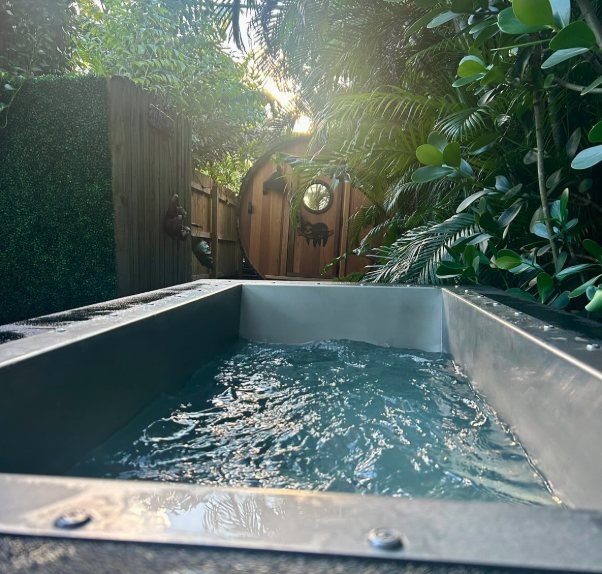
Sauna and cold plunge on their own each do something real. Put together in a deliberate hot-cold rotation, they trigger a bigger response than either does by itself. Heat drives vasodilation, blood vessels widening to move blood toward the skin. Cold does the opposite, vasoconstriction, blood vessels narrowing and shunting blood back to the core. The rapid alternation between the two, sometimes called a vascular pump, is the actual mechanism behind contrast therapy, and it's measurable: cold water immersion alone has been shown to spike norepinephrine by more than 500%. That's the physiological basis for a protocol, not a wellness trend.
The physiology of contrast
When you enter a hot sauna, blood vessels near the skin dilate, heart rate climbs, and blood pressure drops slightly even as cardiac output increases. When you follow that with cold water, the reverse happens fast: vasoconstriction shunts blood back toward the core, heart rate can drop sharply, and the cold-shock response triggers a rapid catecholamine spike.
That spike is well documented. A study published in the European Journal of Applied Physiology measured plasma catecholamines during water immersion at different temperatures and found that immersion at 57°F increased noradrenaline by 530% and dopamine by 250%, compared to no meaningful change during warmer immersions at 68°F and 90°F. Cold specifically, not water immersion generally, is what's driving the response. Noradrenaline at that level is associated with alertness, focus, and an anti-inflammatory signaling cascade; the practical result is the sharp, awake feeling people describe after a cold plunge.
The alternating cycle, heat-driven dilation followed by cold-driven constriction, is thought by researchers to accelerate clearance of inflammatory byproducts and act as a training stimulus for the autonomic nervous system, similar in kind (though not in intensity) to what regular exercise does to cardiovascular conditioning.
The protocol
There's no single official protocol, but the structure that shows up consistently across sauna-and-cold-plunge practice looks like this:
Finishing on cold rather than heat matters more than most people expect. Ending on heat leaves you relaxed and often drowsy; ending on cold leaves you alert, which is the state most people doing this protocol are after. A full 2 to 3 round session runs 60 to 90 minutes including setup, which makes it a deliberate recovery-day or weekend ritual rather than a quick daily habit for most people.
Do you need a dedicated cold plunge?
No. A cold shower works and is the free, always-available version. It's practical and effective, though it targets the upper body and back more than full-body immersion does. Full-body cold immersion produces a more complete vasoconstriction response and a more intense version of the cold-shock breathing challenge, which is part of what makes it feel more powerful.
Options scale with budget and commitment:
- Cold shower: no added cost. Works well, targets less surface area than full immersion.
- Stock tank or ice tub: roughly $150–$400. Fill with cold water and ice as needed. A common setup for people serious about the practice but not ready for a dedicated system.
- Dedicated chiller system: roughly $1,000–$5,000. Holds a set temperature, typically 40–55°F, year-round with no ice required.
- Custom-built cold plunge: a permanent feature integrated into the sauna area itself, built alongside a barrel sauna rather than added as an afterthought.
The setup that skips the plunge entirely
There's one version of this protocol that doesn't need a tub, a chiller, or ice at all: a floating sauna. Step out of a 180°F barrel sauna directly into a lake, and the contrast is immediate and complete, no equipment, no water to haul, no temperature to maintain. It's the same vasodilation-to-vasoconstriction cycle described above, just delivered by the actual lake instead of a tub. For anyone with waterfront access, it's the simplest version of contrast therapy that exists, and it's part of why floating saunas have become a genuine growth category rather than a novelty: every session doubles as its own photo, which is its own kind of word-of-mouth marketing for anyone renting the experience out.
The mental side
The cognitive part of cold exposure is underrated relative to the physiological part. Stepping into 50°F water triggers an immediate instinct to get out, and staying in while breathing deliberately through that instinct is a genuine exercise in nervous system regulation. People who keep the practice up for months report better stress tolerance, sharper post-session focus, and steadier baseline mood, consistent with what's known about norepinephrine's role in alertness and mood regulation. That's a real biochemical mechanism, not a placebo story, though individual response varies and no controlled trial has isolated "months of contrast therapy" as its own outcome measure.
Who should be cautious
Cold immersion is a real cardiovascular stressor layered on top of a real heat stressor. Anyone with a heart condition, uncontrolled blood pressure, Raynaud's, or who is pregnant should talk to a doctor before starting a contrast protocol, not just a sauna habit alone. Never do cold immersion alone if there's any risk of losing consciousness or coordination in the water. Build up gradually rather than starting with the coldest, longest version of the protocol on day one.
FAQ
What's the actual order: hot first or cold first?
Hot first, then cold, repeated for 2 to 3 rounds, finishing on cold. Starting cold before the body is warmed up is a harsher, less controlled version of the same stress response.
How long should each round last?
15 to 20 minutes in the sauna at 170–185°F, followed by 2 to 3 minutes of cold immersion at 50–60°F, with about 5 minutes of passive rest between rounds.
Do I need an expensive cold plunge tub to get the benefit?
No. A cold shower produces a real, measurable version of the same response, just at lower intensity than full-body immersion. A stock tank with ice is a common, low-cost middle ground.
Is a floating sauna a legitimate substitute for a cold plunge setup?
Yes. Stepping from a heated floating sauna directly into a lake produces the same heat-to-cold contrast as a dedicated plunge tub, without the equipment.
Why finish cold instead of finishing hot?
Finishing on heat leaves the body relaxed and often drowsy. Finishing on cold leaves the norepinephrine-driven alertness as the last thing the nervous system registers, which is the effect most people doing this protocol are after.
This article summarizes published research on heat and cold exposure and isn't medical advice. Talk to a doctor before starting a contrast therapy practice if you have a cardiovascular condition, are pregnant, or have any concern about heat or cold exposure.
Whether the plan is a barrel sauna and a stock tank in the backyard or a full floating sauna built for step-in, step-out contrast at the water's edge, Nomad builds both from Hudson, Wisconsin. Read the Buyer's Guide to see what fits the property, or request a quote to start planning a build.
Related saunas
- Custom backyard barrel saunas — Delivered fully assembled, ready to fire the first night.
- Custom barrel saunas, built to order — Backyard, mobile, floating, and commercial builds. No kits.