Craft 6 min read
What is Yakisugi?
By Nomad Sauna
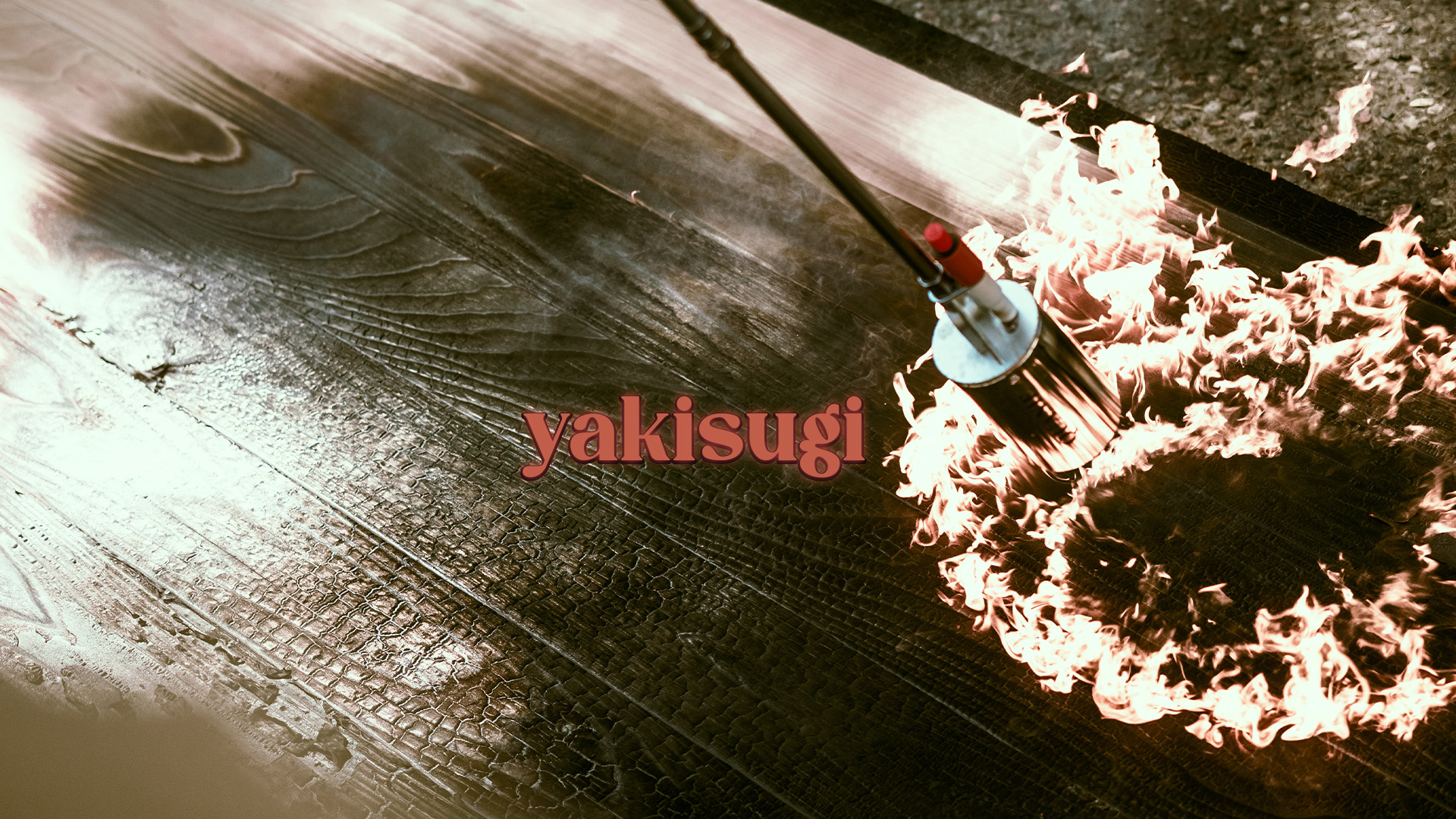
What Is Yakisugi?
The art of preserving wood with fire.
In the coastal villages of 18th-century Japan, builders discovered a quiet paradox: that fire, the very force that destroys wood, could also be the one to preserve it. The technique became known as yakisugi, or what the West later named shou sugi ban.
The method is deceptively simple: three boards are bound into a tall chimney, lit from within, and left to burn until flames race up the grain and leave a fragile crust of carbon. What emerges is a plank transformed, its outer tissue converted to pure carbon, a material that rots reluctantly, repels insects, and shrugs off water and sun alike.
For centuries, yakisugi clothed the farmhouses of western Japan, weathering the salt wind of the Seto Inland Sea. Today, architects from Tokyo to Oslo, and the lake country of Minnesota and Wisconsin, have taken up the torch, drawn by the finish's depth, its warmth, and the quiet satisfaction of using fire to give wood a longer life.
The correct name is Yakisugi. What happened to the other one is worth understanding.
Yakisugi vs. Shou Sugi Ban: Same Wood, Wrong Name
The word is written 焼杉. It combines yaki (焼), meaning to burn or char, and sugi (杉), the Japanese cedar, Cryptomeria japonica. Put them together and Yakisugi means, almost literally, "charred cedar." Add the character for board (板) and the full term yakisugita means "charred cedar board."
So where did "Shou Sugi Ban" come from? A misreading. Japanese characters often carry two kinds of pronunciation: a native Japanese reading and a Sino-Japanese one borrowed from Chinese. The character 焼 reads as yaki in its native form, but its borrowed reading is shou. Somewhere in the technique's move to the West, the wrong reading stuck to the first character while the others kept their native sound, and "Shou Sugi Ban" was born. In Japan, the craft is simply Yakisugi.
We lead with the correct term because the name is a small signal of a larger thing: whether the person selling you charred wood actually understands it. Plenty of people search for "Shou Sugi Ban," so it is worth acknowledging, but Yakisugi is the word.
Where Yakisugi Came From
Yakisugi has been used in Japanese building for over three centuries, reaching back to the 1700s, mainly as exterior siding and fencing for homes in a time before chemical wood preservatives existed. Japanese builders found that fire, applied carefully, did what no coating could: it changed the surface of the wood itself into something that decay struggled to take hold of.
The broader idea is older than that. Cultures around the world had long known that controlled burning hardens wood, the same principle behind fire-hardened spear tips. The Japanese contribution was turning that principle into a refined architectural finish. Many of those original Yakisugi buildings are still standing in rural Japan, weathered to silver-grey but structurally sound, which is the kind of performance record no synthetic coating can claim yet.
The technique faded mid-century as cheaper modern siding arrived, then came back. Today it is in a global revival, valued for exactly the combination it has always offered: durability and a striking look in the same step.
How It Is Actually Made
Authentic Yakisugi is made with fire, not a print of fire. What matters is the depth and quality of the char. The carbon layer needs to reach a few millimeters deep to actually protect the wood beneath it. Too shallow and it is decoration; done right, the charred layer bonds with the wood's own chemistry. After charring, the board can be left raw, brushed to bring out the grain texture, or finished with oil, depending on the look you want, from a heavy alligator-skin crackle to a smoother iridescent black.
This is hand work. It is slow, it is hot, and it is done by feel. That is the whole point.
Why Burning Wood Makes It Last Longer
It seems backwards. Fire destroys wood. Why would charring it make it more durable?
The carbon crust is the answer. Once the surface is converted to carbon, several things change at once:
- Water sheds off instead of soaking in, because the carbonized surface is far less absorbent than raw wood.
- Rot and mould struggle to start, since they need moisture and accessible cellulose, and the char denies them both.
- Insects lose interest, with no easy surface to bore into.
- The wood moves less, because the treated surface is more dimensionally stable through wet and dry cycles.
- Fire resistance improves, since a surface already converted to carbon does not ignite the way raw wood does.
- The charred surface holds heat better. Carbon is a more effective thermal mass than raw wood fiber. The walls absorb and retain heat rather than just containing it, which contributes to how the barrel performs as a heat environment.
It is preservation by transformation. You are not adding a barrier on top of the wood. You are changing the surface of the wood into the barrier.
Authentic Yakisugi vs. the Painted Imitation
As Yakisugi has trended, a lot of what gets sold under the name is not the real technique. The common shortcuts are paint, stain, or a stamped texture meant to look like char. They are cheaper, faster, and fundamentally different products. A coating sits on top of the wood and will eventually peel, fade, or need reapplication, because it is a layer, not a transformation. Real charred wood is the surface itself.
There is one honest nuance worth naming. Some purists argue that "true" Yakisugi can only be done on Japanese sugi (Cryptomeria japonica), the species the word literally refers to. That is a fair point about the original material. The authenticity that matters for performance and craft, though, is the method: real fire, charred by hand, to a protective depth, rather than a coating pretending to be char. Nomad applies that authentic hand-charring method to clear-grade Western Red Cedar, the same knot-free cedar in our barrels, which brings its own natural preservative oils to the result.
Yakisugi on a Nomad Sauna
Nomad is the only barrel sauna builder in North America offering authentic hand-charred Yakisugi. Not paint. Not stain. Not a stamped texture. Real fire-charred wood, done by hand in the Hudson, Wisconsin workshop, available across every product line: the stationary residential build, the Mobile Series, the floating sauna, and commercial units.
On a sauna specifically, the finish earns its place twice. A barrel lives outdoors in full weather, and the charred exterior shrugs off the water, sun, and freeze-thaw that punish a wooden structure. Most wood treatments work through chemistry. Preservatives, stains, coatings: they soak in or sit on the surface and hold decay off through synthetic means. A sauna runs hot, the space is closed, and you are breathing the air inside it. Yakisugi treats the wood through fire. What preserves the outside never enters the room. It also looks like nothing else. A matte-black cedar barrel against snow or a green backyard is the kind of object people photograph. The finish weathers on its own terms and asks almost nothing of you in return, which is the opposite of a coating you have to babysit.
If a low-maintenance exterior and a deep black finish appeal to you, Yakisugi is the upgrade to choose at order time, since it is applied during the build.
Frequently Asked Questions
What does Yakisugi mean?
It is Japanese for "charred cedar." The word 焼杉 combines yaki (to burn or char) and sugi (Japanese cedar, Cryptomeria japonica). Adding the character for board gives yakisugita, "charred cedar board."
Is Yakisugi the same as Shou Sugi Ban?
Yes. They refer to the identical technique. "Shou Sugi Ban" comes from a misreading of the Japanese characters, using the borrowed Sino-Japanese reading of the first character instead of its native one. The correct term is Yakisugi.
Why does charring wood preserve it?
Burning converts the surface into a carbon layer that sheds water, resists rot and mould, deters insects, improves dimensional stability, and increases fire resistance. The protection is the transformed surface itself, not a coating on top of it.
Does Yakisugi require maintenance?
Very little. Because the protection is the charred surface rather than an applied coating, there is no peeling paint or recoating cycle. It weathers on its own over many years.
Can I get Yakisugi on a sauna?
Yes. Nomad offers authentic hand-charred Yakisugi on all product lines as an exterior upgrade chosen at order time. Learn more on the Yakisugi page.
Every Nomad barrel sauna is handbuilt in Hudson, Wisconsin and delivered fully assembled. To talk through the Yakisugi finish on a stationary, mobile, floating, or commercial build, schedule a 30-minute consultation or request a quote.
Related saunas
- Yakisugi charred-cedar finish — The traditional Japanese finish on a Nomad barrel sauna.
- Custom barrel saunas, built to order — Backyard, mobile, floating, and commercial builds. No kits.