Wellness 4 min read
Sauna Ventilation: Why It Matters
By Nomad Sauna
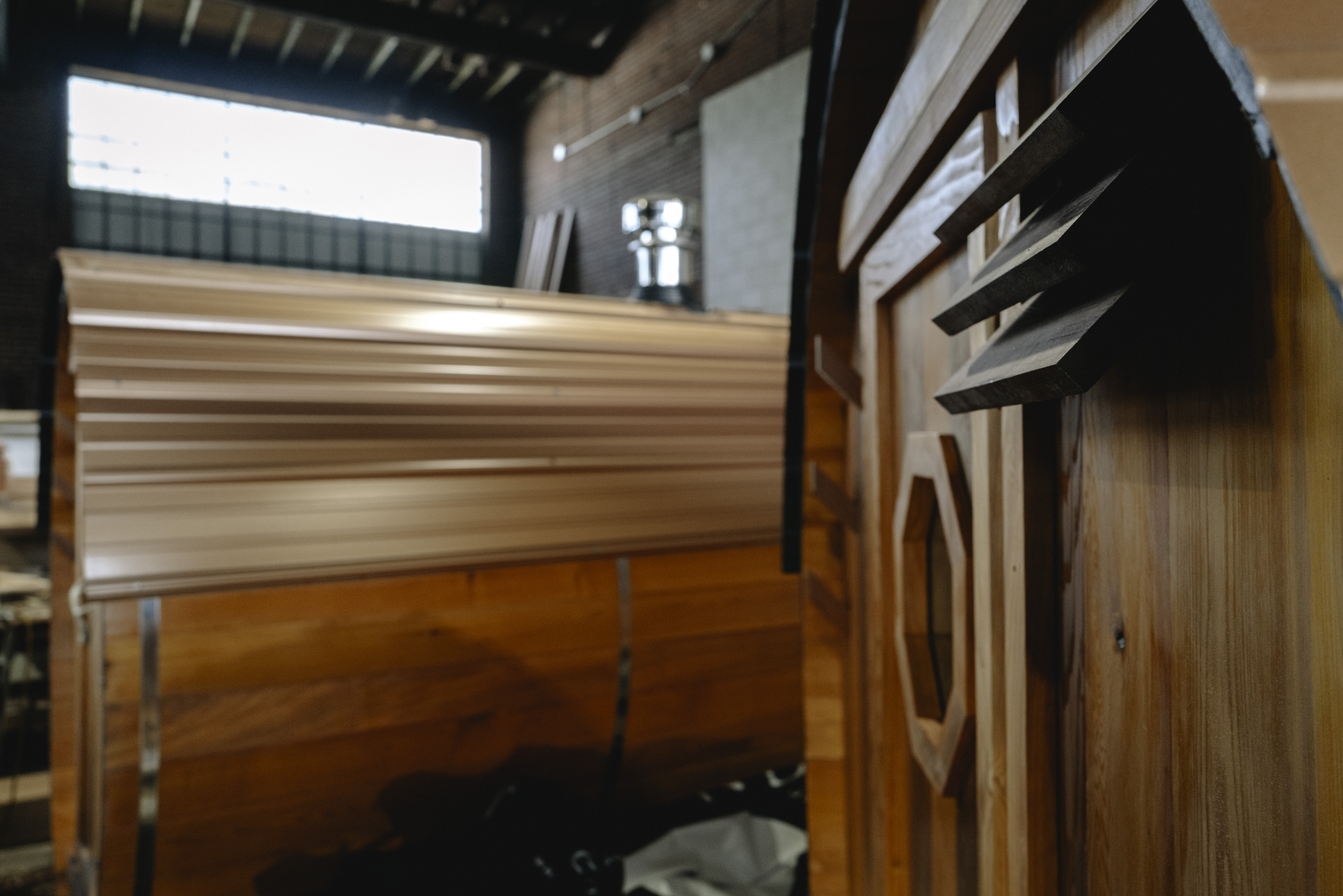
Most barrel saunas have one vent. It sits near the ceiling, lets hot air out, and that's the entire ventilation system. It works, in the sense that the room doesn't feel like a sealed box. It doesn't do much else.
A sauna that only exhausts hot air is missing half the job. Ventilation in a sauna has two functions, not one: getting stale hot air out, and pulling fresh cold air in to replace it. Without the second half, the air inside a session gets thinner and more stagnant the longer you sit in it, and the stove has to work harder to keep pulling combustion air from somewhere.
What Sauna Ventilation Is Actually For
A sauna is a sealed room running a heat source at 170°F to 200°F for extended sessions, often multiple times a week. Without deliberate airflow, three things happen: the air quality drops as oxygen is consumed and moisture builds, condensation collects in corners and under the floor with nowhere to go, and löyly, the steam released when water hits the hot stones, has nowhere to clear to before the next pour.
Good ventilation solves all three by creating a real circuit: cool air drawn in low, near the floor, and hot air pushed out high, near the ceiling. That's the same basic principle behind how a fireplace or wood stove draws combustion air, applied to a room full of people instead of a firebox.
Cold In Low, Hot Out High: How It's Supposed to Work
Every barrel sauna has an exhaust vent, usually a slider near the ceiling. That's the "hot out high" half of the circuit, and it's the part almost every builder gets right because it's the obvious part.
The "cold in low" half is where most saunas cut a corner. A single high vent creates some draft on its own, but without a dedicated low-level intake, the sauna is pulling replacement air from wherever it can find a gap, inconsistently, rather than through a designed path.
Nomad Sauna builds four ventilation points into every barrel, not one. Three drains sit at floor level around the base of the barrel. Each one does two jobs: draining any excess moisture from sweat or a löyly pour, and pulling cold air up from underneath as the stove heats the room. On wood-fired builds, a fourth drain sits directly in front of the stove, functioning as a dedicated oxygen intake for the fire itself. Better draft, a cleaner burn, and more löyly off the rocks as a result.
Drainage and air intake sharing the same opening isn't a workaround. It's the design: the same low point that needs to shed moisture is exactly where fresh, cool air needs to enter.
Why This Matters Beyond Comfort
Ventilation isn't just about how a session feels, though a sauna with real airflow does feel noticeably different by the last few minutes of a long session compared to one running on a single vent. It also affects the structure itself.
Trapped moisture with nowhere to go is exactly the condition that encourages rot and decay in an untreated wood interior over time. A sauna designed to move air and moisture through, not just hold heat, is doing part of the work that protects the wood alongside the clear-grade Western Red Cedar itself.
It also affects how the stove performs. A wood-fired stove starved for combustion air burns inefficiently, produces more smoke, and takes longer to get the stones to temperature. A dedicated intake in front of the firebox gives the fire the air it needs without relying on whatever leaks in around the door.
Ventilation Design: Single Vent vs. Four-Point System
Frequently Asked Questions
Do all barrel saunas need ventilation?
Yes. Any enclosed room running sustained high heat needs a way to exchange air, both to maintain breathable air quality during a session and to let accumulated moisture and steam clear between sessions.
What's the difference between a vent and a drain in a barrel sauna?
In a well-designed barrel sauna, they can be the same opening. A floor-level drain sheds excess moisture from sweat or a löyly pour while also functioning as a low-level air intake, pulling cool air in as the stove heats the room above it.
Does ventilation affect how a wood-fired sauna stove performs?
Yes. Wood-fired stoves need combustion air to burn efficiently. A dedicated intake near the firebox improves draft and burn quality; without one, the fire pulls air from whatever gaps it can find, which is less consistent and less efficient.
Can too much ventilation cool a sauna down?
A properly designed system is balanced around the stove's output, not working against it. The goal is a controlled circuit, not an open window. Four small, purpose-built openings perform differently than one large, uncontrolled gap.
Is ventilation something you can add to an existing barrel sauna?
It depends on the build. Retrofitting floor-level intake drains into an already-assembled barrel is far more difficult than building the ventilation path in from the start, which is why it's worth asking a builder how they've designed for airflow before buying rather than after.
Request a quote for a custom barrel sauna built in Hudson, WI, or schedule a 30-minute consultation to see how ventilation, stove choice, and löyly all work together in a Nomad build.
Related saunas
- Custom backyard barrel saunas — Delivered fully assembled, ready to fire the first night.
- Custom barrel saunas, built to order — Backyard, mobile, floating, and commercial builds. No kits.