Business 5 min read
Sauna for Gyms & Wellness Centers: A Revenue Amenity
By Nomad Sauna
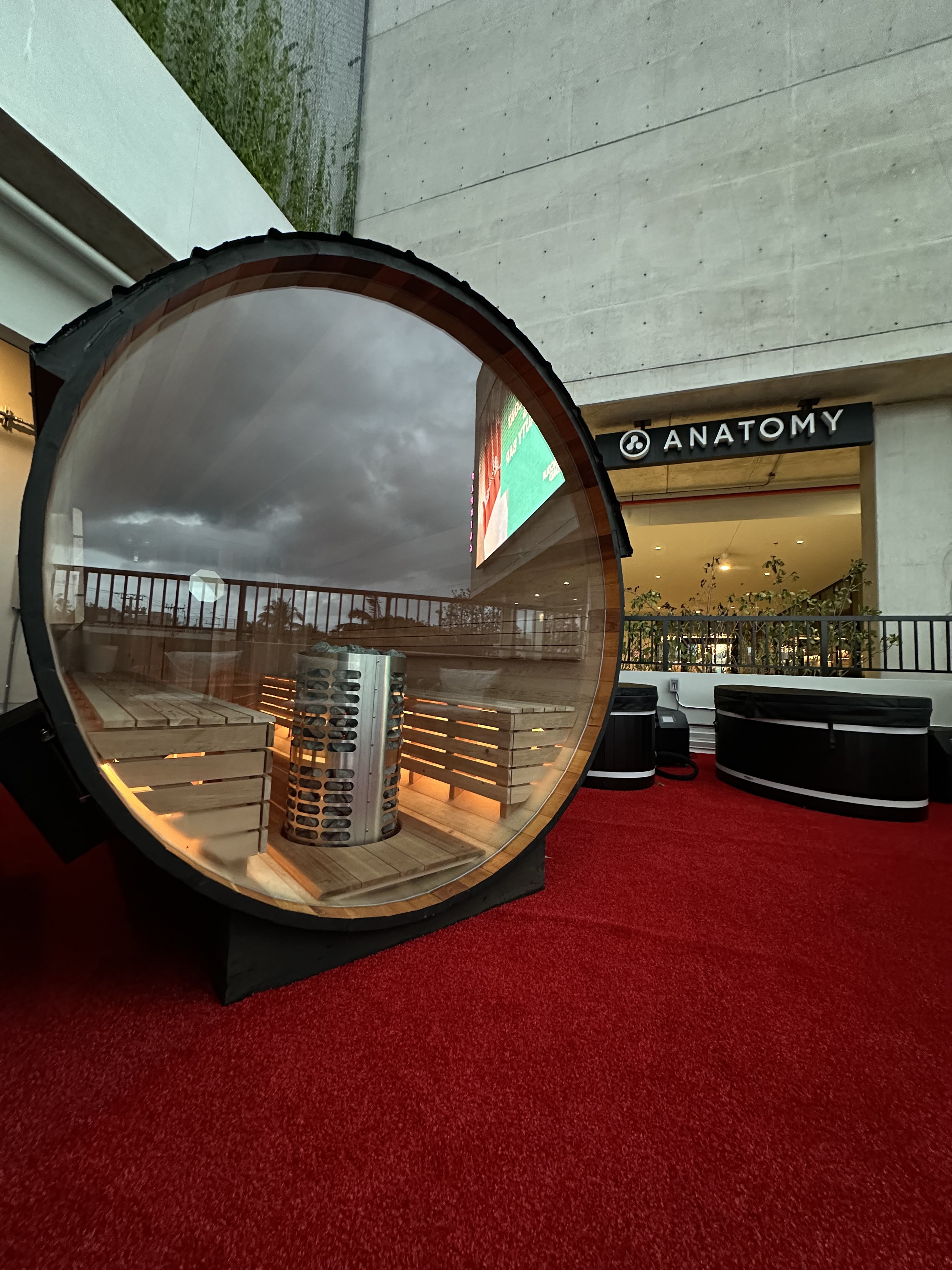
Most gyms plan a sauna the way they plan a water fountain: something to include because competitors have one, sized to whatever corner is left over after the equipment floor is laid out. That's backwards. A member carves a finite hour out of their day to be there — treating the amenity built for that hour as an afterthought is a small way of not respecting how they spent it. A commercial outdoor sauna built and positioned correctly isn't a box to check — it's a chance to actually wow a member, to turn a workout into an experience worth telling people about. That delight is what ends up moving retention and revenue, and gyms that treat the sauna that way get a different result than the ones that don't.
Retention is already the fight
Gyms don't need to be convinced that retention is hard. Industry-wide annual member retention sits at 66.4%, meaning roughly one in three members leave every year, and members who only use the gym floor — no classes, no community spaces — churn at meaningfully higher rates than members who engage with the club beyond the equipment (ABC Fitness Solutions, 2026 Fitness Industry Statistics). A recovery space — sauna, cold plunge, turf — is built to do exactly what those higher-retention formats do: give members a reason to be in a shared space, on a repeat basis, that isn't just another rep. It won't fix retention on its own, but it's aimed at the same problem gyms are already losing sleep over.
The US sauna market itself is growing fast enough that gyms sitting this out are ceding ground to competitors who don't: the market was valued at roughly $437.4 million in 2025 and is projected to grow at a 6.5% CAGR through 2030 (Technavio, US Sauna Market Analysis).
The real thing that makes this work
One upscale gym didn't stop at "the sauna members expect." It built two 16-foot barrel saunas, ran them hot, and built its own marketing language around the result — "the hottest sauna" in the market became part of the gym's identity, not a footnote on the amenities page. That kind of specific, ownable claim is only possible because what's underneath it actually holds up under daily traffic.
The story didn't stop at one gym. Another operator — building a full recovery zone with sauna, cold plunge, and turf for a multi-location fitness brand — found that gym through word of mouth at an industry event and is now spec'ing two 12-foot units of its own: one women's-only, one co-ed. A well-executed sauna doesn't just retain the members who use it. It gets seen by other operators, and it becomes the reason the next buyer calls.
Build for gym traffic, not showroom traffic
Cedar shrinks as it dries and swells as it takes on moisture — normal behavior for any barrel sauna. At home, that cycle plays out slowly. In a gym running a sauna dozens of times a day, seven days a week, it plays out fast and often, and most builders don't design around it. A flat-pack kit ships tight and opens up at the joints once real daily use gets to it — the kit vs. custom-built gap showing up as a maintenance ticket instead of a marketing claim.
Nomad's commercial units are specified for that cycling from the start — stave fit, band tension, and joint geometry built for sustained high-frequency use, not a single hot photo shoot.
Nomad's commercial line for gyms and studios:
Every size ships with the same clear-grade Western Red Cedar and band-compression joinery as Nomad's residential line, plus a 5-year build warranty and custom branding — laser-engraved logos, branded window covers — for gyms that want the sauna to read as their amenity, not a generic add-on.
What actually turns delight into revenue
Membership tiering. A recovery zone is a clean line to draw a premium membership tier around — sauna, cold plunge, and turf bundled into a tier that costs more than gym-floor access alone, the same way boutique studios already price around recovery-suite access.
Corporate and group accounts. Recovery amenities are a differentiator in the corporate-wellness and group-membership sales conversation, where a gym is competing for a company's wellness budget, not just an individual's monthly dues.
Free marketing. "The hottest sauna" positioning cost nothing to produce beyond building the sauna well — it became the gym's own language, repeated by members and picked up by referrals, which is the kind of earned content a paid campaign can't buy.
None of that works if the sauna itself doesn't survive the traffic. The revenue case and the durability case are the same case.
This article provides general information and is not legal, financial, or business advice. Revenue and retention outcomes vary by facility, membership structure, and local market. Consult your own financial advisor before building projections specific to your gym.
FAQ
How much does a commercial sauna for a gym cost?
Pricing depends on size, stove type, and finish — request a quote for a spec built around your facility and member volume.
What size sauna does a gym or fitness studio need?
A 12-ft unit fits a boutique studio or a single women's-only or co-ed recovery room; 16- and 20-ft units suit full-service gyms and multi-location flagships. See the commercial sauna line for full specs.
Can a sauna actually increase gym revenue?
It can function as a premium-tier upsell and a corporate-wellness differentiator, but the revenue only materializes if the amenity is built to survive the traffic a gym puts through it — see the durability section above.
Women's-only vs. co-ed sauna — which should a gym choose?
Multi-location fitness brands building out recovery zones are increasingly choosing both: a women's-only unit and a co-ed unit, sized to member demand rather than picking one over the other.
How long does a commercial sauna last under daily gym use?
A sauna built for thermal cycling — proper stave fit, band tension, and joint geometry designed for repeated heat and moisture cycles — holds up to years of daily gym traffic. Nomad's commercial builds carry a 5-year warranty.
Nomad builds commercial barrel saunas for gyms, studios, and wellness centers from its workshop in Hudson, Wisconsin, and delivers them fully assembled nationwide. See the full commercial sauna line, browse locations and delivery, read how hotels and resorts are building the same business case, or request a quote to spec a build for your facility.
Related saunas
- Custom backyard barrel saunas — Delivered fully assembled, ready to fire the first night.
- Custom barrel saunas, built to order — Backyard, mobile, floating, and commercial builds. No kits.