Wellness 4 min read
Sauna and Sleep: Why It Works
By Nomad Sauna
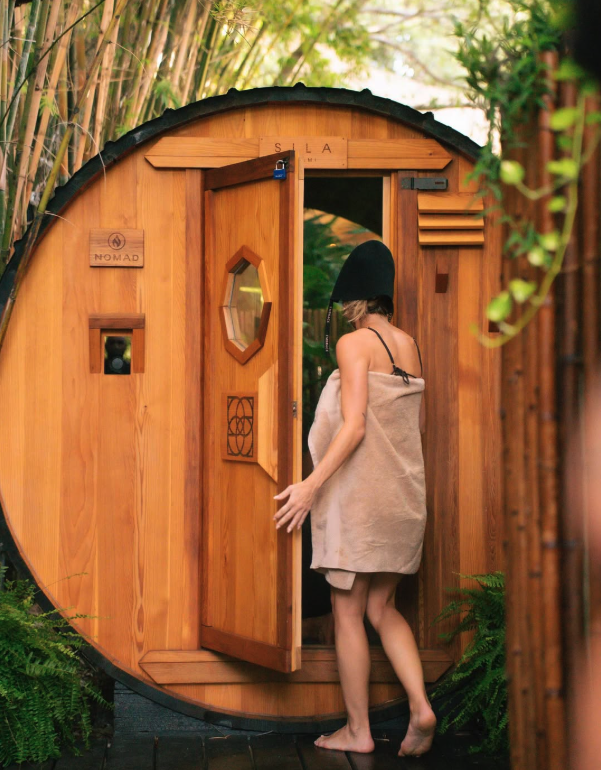
A sauna doesn't put you to sleep by relaxing you. It works because of what happens to your core body temperature in the hour after you leave it. Heat exposure pulls blood to the skin's surface, and once you step out into cooler air, that surface heat dissipates fast, dropping your core temperature faster than it would fall on its own. That rapid drop is close to the same signal your body uses to initiate sleep at night. Time a sauna session before bed, and instead of fighting your circadian system, you're handing it the exact cue it's waiting for.
The mechanism, not the vibe
Sleep researchers have known for years that the body's internal clock uses core temperature as a trigger. You fall asleep more easily when your core temperature is dropping, and you wake up as it starts to climb again toward morning. That's why people's hands and feet often feel warm right before they doze off: blood is shunting to the skin to shed heat and pull the core down.
A 2019 meta-analysis in Sleep Medicine Reviews, which reviewed more than 5,000 studies on passive body heating and sleep, found that a warm bath or shower taken 1 to 2 hours before bed, at water temperatures around 104–109°F, helped people fall asleep an average of 10 minutes faster and improved overall sleep quality. The mechanism the researchers pointed to is exactly the vasodilation-then-cooling effect described above. That research was done on baths and showers, not sauna sessions specifically, so it's worth being precise: no study has isolated barrel sauna use on this exact outcome. But the physiological trigger, heat exposure followed by a faster-than-normal core temperature drop, is the same one a sauna produces, at a larger scale. A sauna heats the whole body, not just water against skin, and the post-sauna temperature swing is more pronounced than a bath's.
Timing matters more than duration
The research on passive heating points to a window: roughly 1 to 2 hours before you want to fall asleep. Go too close to bedtime and you're still mid-cooldown when you want to be unconscious. Go too early and the effect has worn off before it's useful.
For most people running an evening barrel sauna session, that means finishing up somewhere between 7 and 9 PM for a normal bedtime. A properly sized sauna reaches sauna temperature in roughly 75 minutes to hit 165°F, and about 90 minutes to reach 180°F, so plan the heat-up time into the window, not just the session itself.
What this looks like in practice
A single round is usually enough for a sleep-focused evening session. This isn't the same protocol as a performance-oriented multi-round sauna session or a hot-cold contrast therapy protocol, both of which are built around alertness and recovery, not winding down. Stacking a cold plunge onto an evening session works against the goal here: the norepinephrine spike from cold exposure is alerting, not calming, and it's better suited to a morning or midday protocol.
Keep the evening version simple: one 15 to 20 minute round at a comfortable heat, no cold finish, then a quiet hour before bed. Hydrate with water before and after. If you're using löyly, light steam from water on the rocks, keep it gentle rather than pushing the room hotter than you'd normally sit in.
Who should be careful
Sauna heat is a real cardiovascular stressor, which is part of why it works. Anyone with a heart condition, uncontrolled blood pressure, or who is pregnant should check with a doctor before adding a regular evening sauna habit, and everyone should exit if they feel lightheaded rather than pushing through a session to finish it. Skip alcohol before or during a sauna session, especially one this close to bedtime.
FAQ
How long before bed should I use the sauna?
Somewhere in the 1 to 2 hour window before you want to fall asleep, based on the research on passive body heating and sleep onset. Too close to bedtime and you're still cooling down; too early and the effect fades.
Does a sauna help you fall asleep faster, or just sleep better once you're out?
Both, according to the underlying research on heat exposure and sleep. The core temperature drop after heat exposure is linked to faster sleep onset and to improvements in overall sleep quality, not just the time it takes to nod off.
Should I do a cold plunge after an evening sauna session for sleep?
No. Cold exposure spikes norepinephrine and is alerting, which is useful for a morning recovery protocol but works against an evening wind-down. Save the sauna and cold plunge pairing for daytime use.
Is an infrared sauna the same as a traditional barrel sauna for sleep purposes?
The research on core temperature and sleep onset is about heat exposure generally, not a specific sauna type. A traditional wood-fired or electric barrel sauna produces the ambient heat and the surface-to-core cooling effect the mechanism relies on.
This article summarizes published research on heat exposure and sleep and isn't medical advice. Talk to a doctor before starting a regular sauna habit if you have a cardiovascular condition or any concern about heat exposure.
An evening sauna habit only works if the sauna is actually there to use. A Nomad barrel sauna, handbuilt in Hudson, Wisconsin and delivered fully assembled, makes a 15-minute wind-down session a normal Tuesday instead of a special occasion. Request a quote or read the Buyer's Guide to start planning.
Related saunas
- Custom backyard barrel saunas — Delivered fully assembled, ready to fire the first night.
- Custom barrel saunas, built to order — Backyard, mobile, floating, and commercial builds. No kits.