Comparison 8 min read
Barrel Sauna vs. Hot Tub: Which Is Worth It?
By Nomad Sauna
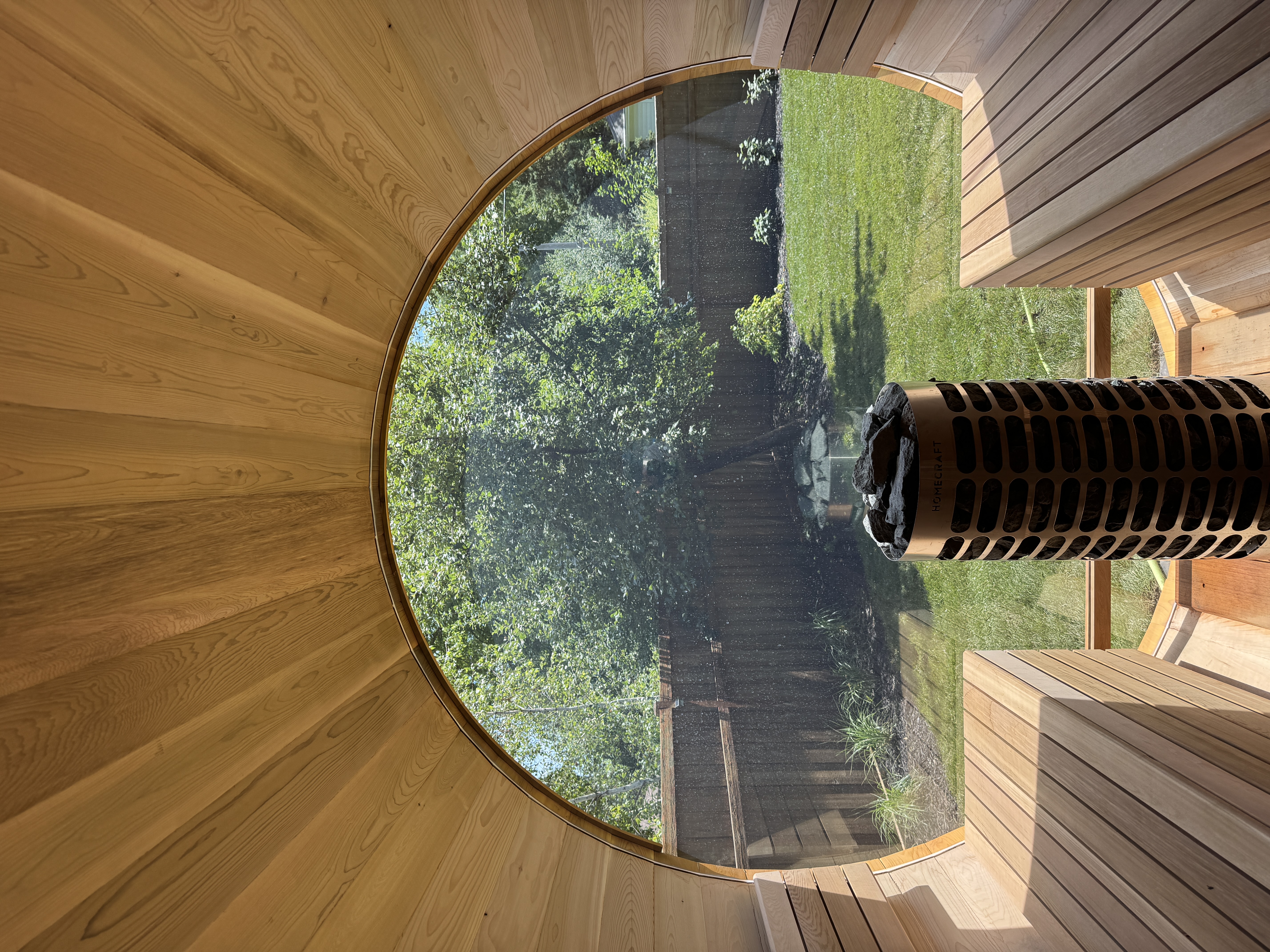
A sauna is a health tool. A hot tub is a warm bubbly bath. That single distinction decides almost everything else in this comparison.
They get grouped together because they both involve heat, outdoor living, and a significant purchase decision. That is where the similarity ends. A hot tub is passive immersion: sit in heated water, let the jets work, soak for 20 minutes. A sauna is a different physiological event entirely. Dry radiant heat at 160–195°F, core temperature rising over 15–20 minutes, followed by a cold exposure or rest. The mechanisms are different. The outcomes are different. So is what you are actually buying.
What Each One Actually Does
A hot tub maintains water at 100–104°F continuously. The pump and heater run around the clock to hold that temperature, whether or not anyone is using it. Jets circulate water and create mild hydrostatic pressure. The experience is accessible and low-commitment: walk out, get in, done.
A barrel sauna heats on demand to 150–195°F. Nomad's floor-standing heaters with full stone coverage take 75–90 minutes to reach temperature, not the 20–30 minutes you'll see quoted for thin-walled kits with minimal stone mass. That's not a knock against the barrel. A heater that gets hot fast is usually one running a thin veneer of stone over exposed coils, the exact setup that produces harsh, short-lived heat. Wood-fired takes longer still but holds temperature with more stability. The session is deliberate: heat up, go in, sweat for 10–20 minutes, cool down, repeat. The ritual is part of the point.
Both deliver heat. What your body does with that heat is not comparable, and neither is the reason most people buy one.
The Health Outcomes Gap
This is the category that actually matters, and it is not close.
Sauna research has developed a substantial body of evidence over the past twenty years. A 2018 JAMA Internal Medicine study tracking Finnish men found that those who used a sauna four to seven times per week had a 40% lower risk of all-cause mortality compared to once-weekly users. Separate research at the University of Eastern Finland linked regular sauna use to reduced risk of cardiovascular disease, hypertension, and dementia. The mechanism appears to involve repeated cardiovascular loading: a 20-minute sauna session at 175°F produces a heart rate elevation comparable to moderate aerobic exercise.
Hot tub research barely exists by comparison, and what does exist doesn't come close. The temperature differential is the whole story: 104°F produces a warm soak. 175°F produces a genuine physiological stress event, the kind the body adapts to over repeated exposure. These are not two doses of the same treatment. They are two different treatments, and only one of them has twenty years of outcomes data behind it.
Löyly, the steam produced when water hits hot stones, adds another dimension the hot tub cannot touch. High humidity at high temperature creates a compounding thermal load: water conducts heat more effectively than dry air, and elevated humidity stalls sweat evaporation, which raises the perceived temperature further. The sauna session asks more of the cardiovascular system because it is doing more. A hot tub soak does not ask much of anything.
Running Costs: On vs. Off
This is where the hot tub comparison becomes stark.
A hot tub runs 24 hours a day, 365 days a year. The pump, heater, and filtration system cycle continuously to maintain temperature and water quality. Annual electricity costs for a standard hot tub run $1,000–$1,500 depending on local rates, insulation quality, and climate. In cold climates, a poorly insulated hot tub can run substantially more.
A sauna heats on demand. A Nomad 10-foot residential barrel with a 10 kW Homecraft Apex draws power only when in use. A full outing, 80 minutes of heat-up plus a 20-minute session, uses approximately 10–11 kWh. At average U.S. residential rates, that is $1.50–$1.75 per session. A household using the sauna four times per week pays roughly $300–$350 per year in electricity.
The running cost comparison over a five-year ownership period:
That gap compounds with maintenance.
Maintenance: Ongoing vs. Almost None
A hot tub requires continuous water chemistry management. pH, alkalinity, sanitizer levels (chlorine or bromine), and stabilizer all need testing and adjustment weekly. Filters clean every two to four weeks. Water drains and refills every three to four months. Pumps, heaters, jets, and control systems require periodic service. The hot tub that sits unused for a month while the owner is away returns to a chemistry problem.
A cedar barrel sauna requires essentially nothing. Cedar's natural oils resist moisture, rot, and insects without chemical treatment. The interior air-dries between sessions. Exterior care varies by finish: a standard cedar exterior can go several years without attention; a Yakisugi finish (hand-charred cedar) is inherently weather-resistant and requires no maintenance product at all. Electric heater service is minimal.
For owners who use their outdoor amenity intermittently, the maintenance difference is significant. A hot tub left unattended requires catch-up chemistry and filtration before it is usable again. A sauna that has not been used in a month is ready in 75–90 minutes.
Installation: What Each Requires
Both a hot tub and a quality outdoor sauna require a dedicated 240V electrical circuit.
A hot tub also requires water supply and drainage. The fill takes 350–500 gallons. Drain-and-refill (quarterly) needs a pump or gravity drain to a suitable drain point. The platform needs to handle roughly 3,000–5,000 lbs of loaded weight. Some municipalities require permits for hot tub installations.
A barrel sauna sits on a gravel pad, compacted base, or simple cradle supports. No water supply. No drain line. No structural load calculation for liquid weight. In most U.S. jurisdictions, a barrel sauna installed on private residential property for the owner's personal use does not require a building permit. It is typically classified as an accessory structure, not a building. (Local codes vary, and commercial or rental installations have different requirements.)
The installation simplicity of the sauna is a real operational difference, not just a lower upfront cost line.
The Cold Contrast Argument
The most significant shift in how both products are understood has come from contrast therapy: the deliberate alternation between heat and cold. Cold plunge tubs, ice baths, and cold-water immersion have moved from athletic recovery settings into residential wellness practice. The physiological argument is that the stress-recovery cycle of hot-to-cold produces stronger cardiovascular and hormonal adaptations than either exposure alone.
For buyers considering a hot tub as a recovery tool, the sauna-plus-cold-plunge combination achieves the goal more directly. The sauna delivers the heat load. A cold plunge delivers the cold. The hot tub occupies neither position cleanly: it is too hot for cold immersion and too mild for the full thermal load that makes sauna physiologically valuable.
The pairing that has replaced the standalone hot tub in many residential wellness builds is a barrel sauna alongside a cold plunge tub. The upfront and operating costs of that combination compare favorably to a quality hot tub.
The Scorecard
Line up every category this comparison actually touches, and the pattern is not subtle.
| Category | Winner |
|---|---|
| Health outcomes | Sauna |
| Running cost | Sauna |
| Maintenance | Sauna |
| Installation simplicity | Sauna |
| Recovery / contrast therapy fit | Sauna |
| Accessibility (always-on, no ritual) | Hot Tub |
| Social spontaneity | Hot Tub |
| Low-temperature comfort | Hot Tub |
| Targeted therapeutic use (disc injuries) | Hot Tub |
Sauna takes five of nine. The four categories the hot tub wins are mostly about convenience and comfort, with one real exception: jets are genuinely the better tool for certain injuries. If what you're buying is a general health tool, the scorecard isn't close. If what you're buying is a warm place to sit with friends on a Tuesday night, or you're managing a specific injury jets are suited for, the calculus changes, which is exactly what the next section is for.
Where the Hot Tub Wins
This comparison would not be honest without naming where the hot tub genuinely holds ground.
Accessibility. A hot tub is always ready. No heat-up, no session commitment. Someone who wants to ease in after getting home at 10 p.m. without the ritual of a sauna session is choosing the right tool.
Social spontaneity. Hot tubs seat groups comfortably in a relaxed, conversational posture. The sauna is a different kind of social experience, closer to deliberate shared ritual than casual hang. Both are real, but they are not interchangeable.
Low-temperature preference. Some users find high-temperature sauna heat uncomfortable, particularly people with certain cardiovascular conditions or heat sensitivities. For those users, a hot tub's 100–104°F is the appropriate tool.
Targeted therapeutic use. Jets are genuinely effective for certain injuries, disc-related back pain in particular, where directed hydrostatic pressure and warm water offer relief that dry heat doesn't replicate. This is one place a hot tub isn't just the more convenient option, it's the more appropriate one.
The honest version of this comparison is: if passive relaxation and spontaneous accessibility are the primary values, the hot tub delivers. If health, recovery, running cost, and maintenance are primary, the sauna wins, and it isn't particularly close.
Frequently Asked Questions
Is a sauna better than a hot tub for recovery?
Yes, and the evidence isn't close. High-temperature dry heat with cardiovascular loading and löyly produces physiological responses (core temperature elevation, heart rate increase, hormonal adaptation) that a hot tub's 100–104°F soak does not match. The hot tub still has a place for passive relaxation and spontaneous use, but not for recovery.
Can a sauna replace a hot tub?
For anyone buying primarily for health and recovery, yes. For casual backyard socializing and low-commitment soak access, the two serve different purposes. Some residential builds use a barrel sauna alongside a cold plunge as the complete contrast therapy setup, eliminating the hot tub entirely.
What is the ongoing cost difference?
A hot tub runs continuously and typically costs $1,000–$1,500 per year in electricity alone, plus water chemistry supplies and periodic service. A sauna heats on demand; regular use typically runs $300–$350 per year in electricity. Over five years, the gap in running costs alone is $3,500–$6,000 in the sauna's favor.
What does installation require for each?
Both need a dedicated 240V electrical circuit. A hot tub also needs water supply, drainage, and a structural platform rated for 3,000+ lbs of loaded weight. A barrel sauna sits on a gravel pad or simple cradle supports with no plumbing required. In most U.S. jurisdictions, a residential barrel sauna for personal use does not require a permit.
Nomad builds residential barrel saunas in Hudson, Wisconsin and delivers fully assembled nationwide. To discuss which configuration fits your property and how it compares to your current options, book a 30-minute consultation or request a quote.
Related saunas
- Custom barrel saunas, built to order — Backyard, mobile, floating, and commercial builds. No kits.
- Barrel sauna buyer's guide — Cost, sizing, and kit vs. custom — what to ask any builder.
- Request a backyard design consultation — Tell us about your property. We'll design a sauna around it.